

Tipping points: what you need to know
We try to keep our climate thoughts positive, but today we’re thinking about tipping points (on Earth, not the questionable game show on TV!). Tipping points are a critical factor in the development of the climate crisis.
What are tipping points?
The IPCC defines a tipping point as “a critical threshold beyond which a system reorganises, often abruptly and/or irreversibly.”
In simple terms, it’s the point at which small changes become significant enough to cause larger, irreversible impacts. An example is the Greenland ice sheet - if it melts it will raise global sea levels by over six metres. This would put large areas across the planet under water, including most of London (check Climate Central’s map to see if you should be investing in a houseboat).
Remember playing on seesaws as a kid? Well imagine you’re carefully walking up a seesaw - it starts off secure but as you walk up the balance slowly shifts between the two ends. Then you reach the middle, the opposite end crashes to the floor and you fly off, landing in a heap somewhere in the vicinity.

They sound scary. Are they actually going to happen?
The concept was introduced by the IPCC 20 years ago. Back then they thought that tipping points would only happen if global temperature rise reached 5°C above pre-industrial levels. But recent IPCC studies suggest they’ll tip at 1°C - 2°C of warming.
So the likelihood of reaching these tipping points increases as the global temperature does.
We hit 1°C in 2017, we're on track to reach 1.5°C before 2040 and we’re hurtling towards 2.7°C+ by the end of this century.
I’d better get a captain's hat to go with my houseboat…
Where are the Earth’s tipping points?
Here’s a map:
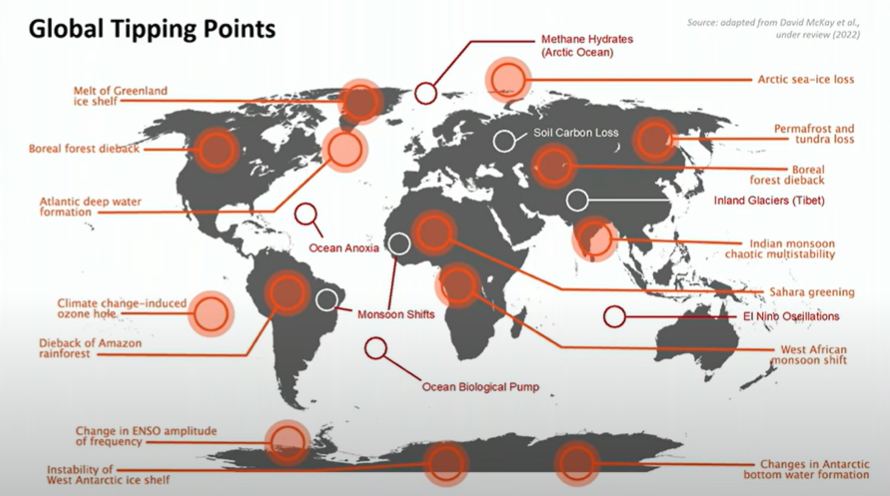
And it’s not just that. They’re all interconnected. As each location tips it’ll have specific impacts on other tipping points around the world, making the effects a whole lot worse.
Right. So what can we do to stop them?
Luckily there’s an answer. Put simply: prevent global temperature rise.
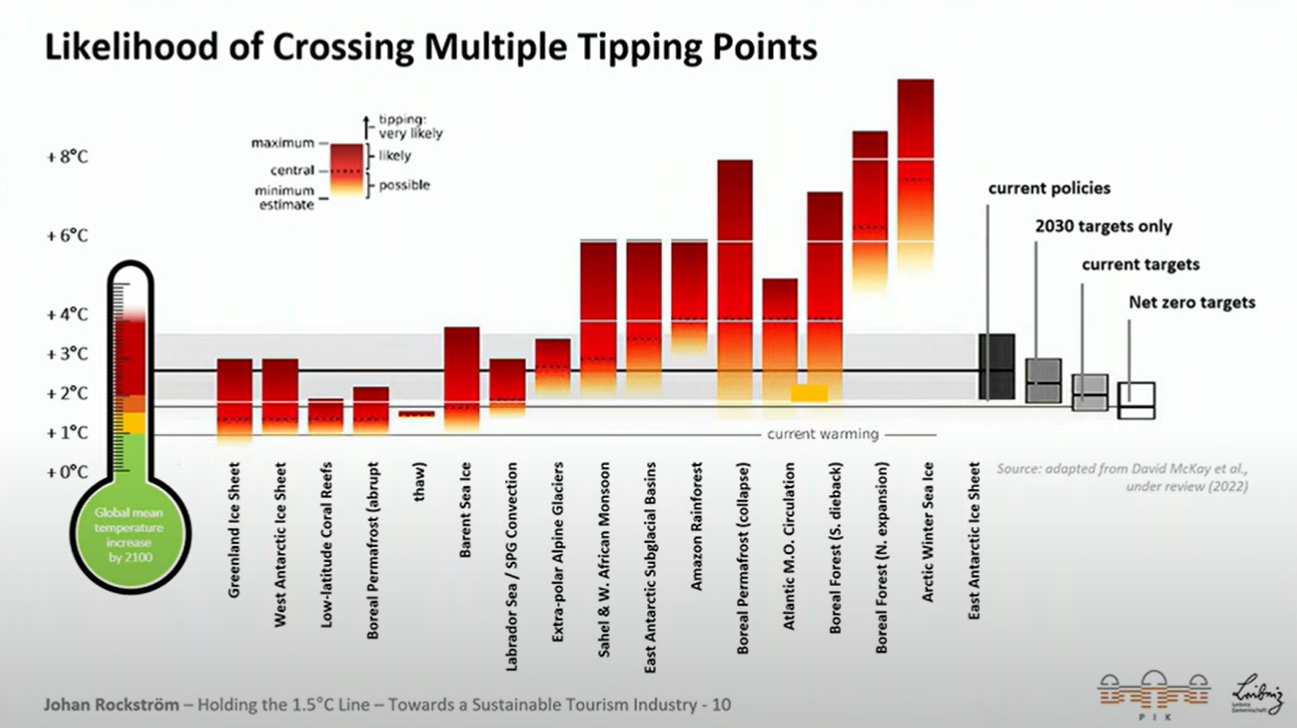
How do we go about that? By reducing and removing carbon from the atmosphere to reach net zero.
Fortunately, there’s an upside to the interconnected nature of the Earth’s ecosystems, there are positive feedback loops too: actions we take today can have more than one positive outcome, and they can come from the most obscure places..
For example, supporting projects that protect whales not only stops the beautiful creatures from going extinct, but also improves the health of our seas (they play an unsurprisingly big role in the food chain) and reduces carbon (they play a surprisingly large role in sequestering carbon).