

When Everyone Is Offsetting, Why Should You Be Insetting?
According to an article by Energy Monitor, 96% of FTSE350 companies have increased their spending on carbon credits (AKA offsets) in the last 2 years whilst 41% of Chief Sustainability Officers don’t use them because of a lack of trust and transparency. So which is the best approach? In this article we’ll explain what offsetting and insetting are, what costs are involved and how they work.
Spoiler alert: we firmly believe that whilst carbon credits have their place, companies should prioritise insetting. The changes we make before 2030 will determine whether we are able to meet our longer term climate targets and meaningfully limit the damage caused by climate change. This article outlines the changes that are most worthwhile.
What is offsetting?
Offsetting is the act of buying carbon credits designed to remove emissions from the atmosphere (through tree, seagrass and mangrove planting or carbon capture) or avoid emissions being released in the first place (by protecting forested areas from being chopped down).
One carbon credit = one tonne of CO2e removed / avoided.
What is insetting?
Insetting on the other hand, is about investing in your company infrastructure to eliminate future emissions for good (therefore removing the need to offset them).
The carbon emissions of a typical company
Without any action, a typical company’s emissions will fluctuate according to business activity and growth. They might look a bit like this:

What an offsetting strategy looks like
An offsetting strategy aims to ‘compensate’ for all emissions created by the company which looks a bit like this:
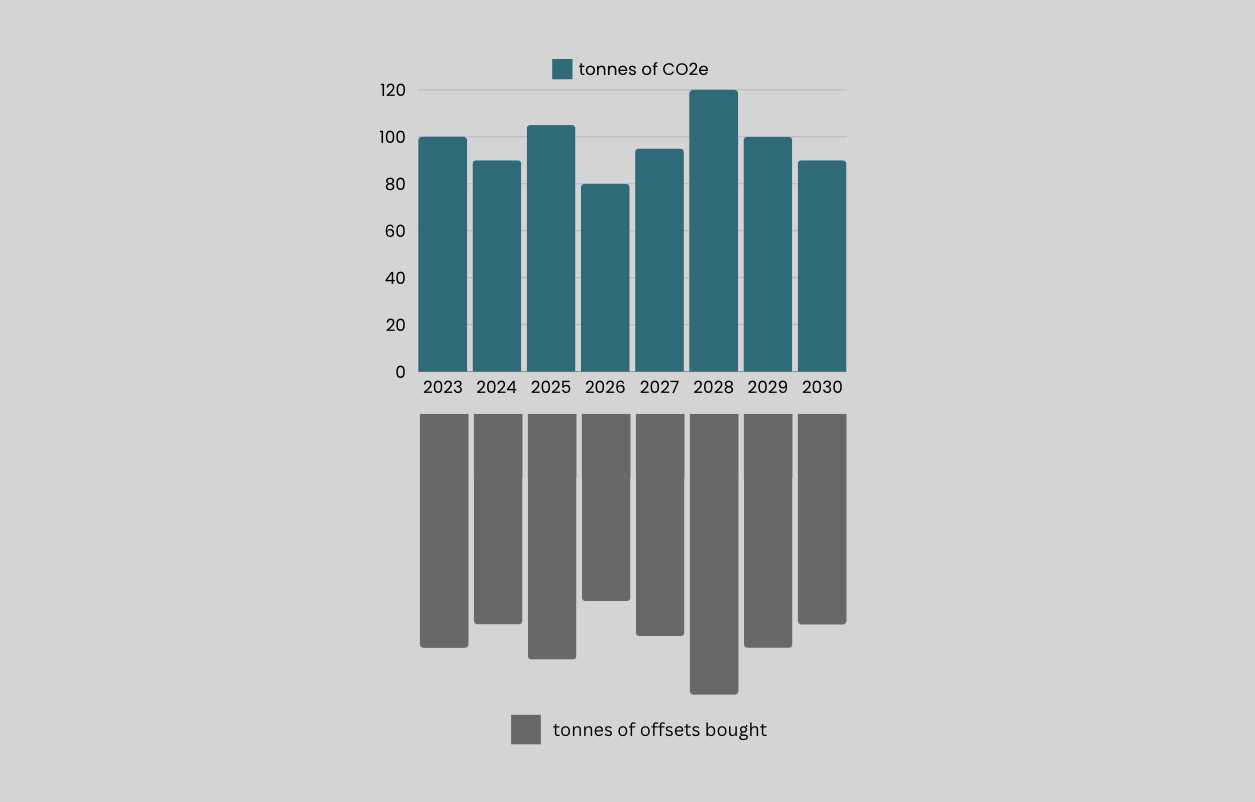
How much does offsetting cost?
Carbon credits, bought by companies to offset their emissions, vary radically in price from under £5 per tonne to £200+ per tonne. Prices differ according to the type of project, supply and demand and also the quality (but this is not a perfect rule of thumb). Buyers should be aware that carbon credit market is unregulated. Without robust checks and balances, cheap, low quality credits that lack monitoring, reporting, research and permanence are readily available.
To give you an example of how to calculate offsetting costs, if a company emits 1,000 tonnes of CO2e (all emissions combined) per year and pays an average of £20 per tonne, it would need to spend £20,000 per year to offset their emissions. This is called a ‘Carbon Neutral’ strategy.
The problem with offsets
As we’ve already alluded to, the quality of the projects can vary wildly. There has been widespread criticism of many projects that have been found not to remove or avoid the emissions they claim to. This makes ‘carbon neutrality’ a claim that is nearly impossible to prove which is why the EU is banning the use of the term on products going forward. Buying offsets can also lead companies not to act to reduce their emissions. With the effects of climate change already being felt, we need to dramatically reduce emissions ASAP. That’s not to say that carbon credits aren’t part of the solution, they are, but they should be a small part and not the main focus.
Buying carbon credits is essentially medicating the issue rather than treating the root cause. We think your business strategy should be the latter.
How does insetting work in practice?
With insetting, you take the money you were going to spend offsetting your company’s carbon footprint and invest it in carbon reducing actions instead, making your emissions profile look more like this:

Good examples of insetting activities include investing in:
solar panels
building insulation
heat pumps
electric vehicles
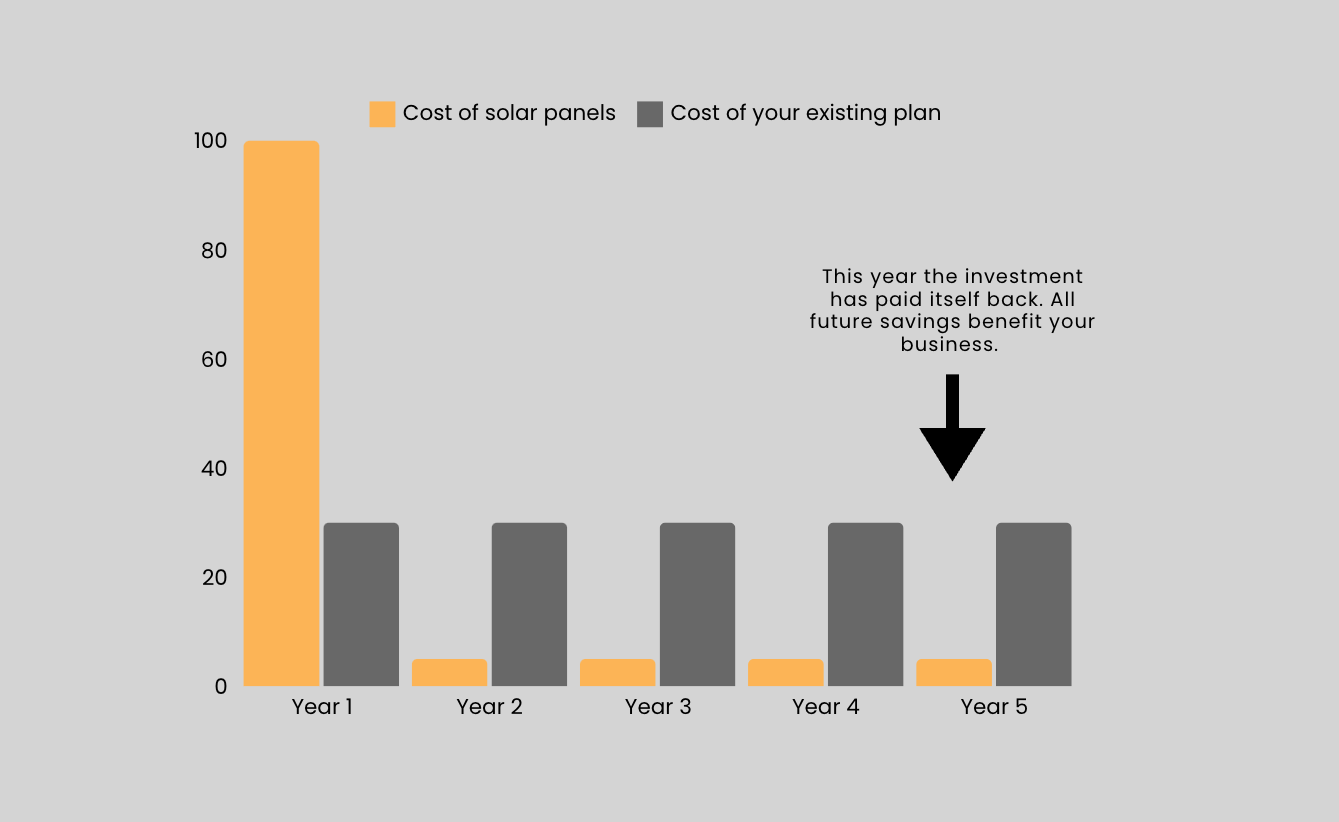
This will reduce your company’s use of fossil fuels (petrol, oil, gas. etc). Better yet, compared to offsets, some investments will save you money in the long run. Like this:
For organisations that don’t own buildings or cars or want to go a step further, other investments can include:
Staff training (Carbon Literacy for example)
Training key suppliers
Financing suppliers to reduce their emissions (because their carbon footprint is part of your carbon footprint)
Hiring more people in your sustainability team
Subsidising low carbon travel (train tickets instead of plane tickets for example)
Purchasing lower carbon fuel like HVO or SAF
Buying and rewilding land yourself (rather than through a carbon credit scheme)
What insetting activities are our clients doing?
Scenic has invested in staff training (we wrote a Carbon Literacy course for the cruise industry for them) which they will roll out in the coming months
Explore! Has invested in solar panels at HQ and staff training too.
Business Design Centre is looking at infrastructure changes to switch from gas to renewable energy
Kuoni has installed electric car charging points at HQ and is putting solar panels on the roof of their building
Canopy & Stars is looking into increasing EV use
Over to you…
How could you be using your offsetting fund to inset and reduce your company emissions for good? If you need help working out the best insetting strategy for your business. Get in touch.
