

Business Growth vs Emissions Reduction - The Airline Industry
It’s a long wrestled with conundrum in the business world. We know there is an urgent need to reduce greenhouse gas emissions to stay within 1.5 C of warming (compared to pre-industrial times). But how do we marry the need to grow business revenues with the pressing requirement to simultaneously reduce its carbon footprint? In many industries, despite decarbonisation action, growth will lead to an increase in absolute (total) emissions.
We don’t pretend to have the answers but we do have a view on this. In this article we’ve set out to illustrate the problem using an airline as an example. Why? Well, the emissions of the aviation industry account for 2% of global emissions. 2% may not sound like a lot, but that’s slightly less than Germany and a little more than Canada’s global share. More importantly, “the demand for air travel is expected to double by 2040, [with the industry] growing at an annual average rate of 3.4%” (source).
Note: We talk a lot about absolute emissions and carbon intensity in this article. Click here to read more about these metrics and how they are used.
How can airlines reduce emissions?
Like all companies, there are multiple strategies airlines can employ to reduce emissions. Let’s take a look at Easyjet. Their strategies to reduce emissions include investing in:
more fuel efficient aircraft
sustainable aviation fuel
operational carbon reduction initiatives (see below for an idea of what these are).
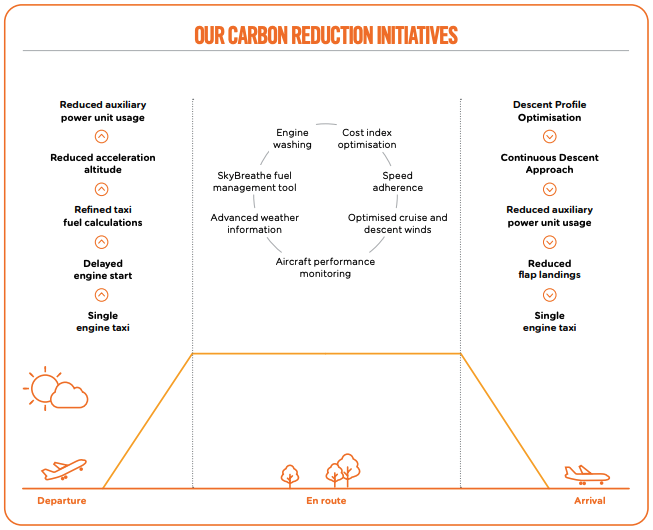
Easyjet’s operational carbon reduction actions
What do airline reduction targets look like?
Easyjet was of just 12 airlines to have its reduction targets rubber stamped by the Science-Based Targets Initiative (SBTi) thanks to their committed to reduce the carbon intensity of their Scope 1 & 2 emissions by 35% by 2035 and 78% by 2050. Sounds good right? And it looks good on paper too, check out this lovely downward trajectory:

Easyjet’s carbon intensity reduction plans on paper
But wait, what about growth?
If growth outstrips carbon intensity reduction targets, total (absolute)emissions going into the atmosphere will increase. The airline industry is projected to grow 3.6% year on year to reach a value of USD 735 billion by 2030. That’s a 32.7% increase in just 8 years! (source)
Easyjet is targeting even higher growth - 5% year on year growth to 2028. In fact, in their 2022 annual report the word ‘growth’ appeared 73 times! Although, to be fair to them, the word ‘emissions’ features 152 times, reminding us they are a forerunner amongst airlines in setting reduction targets.
What effect does growth have on Easyjet’s absolute emissions?
By 2035, Easyjet aims to reduce intensity emissions by 35% whilst simultaneously (assuming a continuous 5% year on year growth plan beyond their 2028 projections) growing sales by roughly 80% compared to 2023.
This means by 2035 total (absolute) emissions are likely to increase by around 25%. Not ideal when the world needs less carbon in the atmosphere. But this can still be seen as progress. If Easyjet did nothing on carbon, their emissions would increase in line with growth, so a (very estimated) 80% increase.
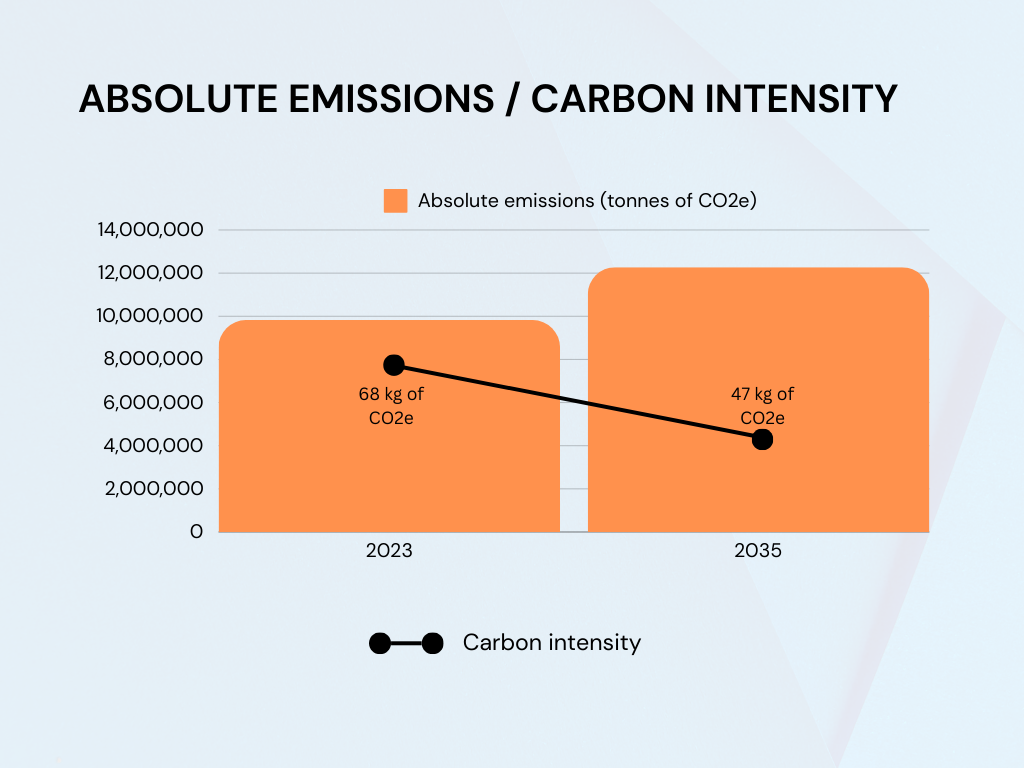
Easyjet’s total emissions will likely increase if they continue to grow at their current rate, even taking their carbon reduction plans into account
Are carbon intensity targets worth it?
Yes in our opinion. ecollective has always believed in, and advocated for, progress over perfection. It’s clear in Easyjet’s case, that a 35% reduction in carbon intensity will prevent a significant amount of emissions from entering our atmosphere. BUT (and this is a big but) the science requires an absolute reduction in emissions. This is perhaps why the SBTi, has removed Easyjet’s carbon reduction commitment from their dashboard (along with over 200 other companies). It’s unclear why, on a case by case basis, but we presume this is because their growth plan and carbon reduction targets are incompatible with the science that requires overall emissions reduction in order to stay within 1.5 degrees of global warming.
So what should be done?
There are two obvious options for Easyjet (and any industry where growth will outpace emissions reduction):
Increase carbon reduction targets
Change how success is measured - from revenue / customers flown to something else
Another strategy, which we recommend for most businesses (but not for airlines due to their emissions profile being so Scope 1 heavy) is to set absolute reduction targets for Scope 1 & 2 emissions and set a carbon intensity goal for Scope 3. This allows for growth whilst reducing absolute (total) emissions. (Read more about the different scopes here).
The main message though from this analysis is that companies must take growth into account when they set their carbon reduction targets and strategies. We know someone who can help with that…
3 ways ecollective can help your business
Measure your company's carbon footprint
Identify your most effective carbon reduction opportunities & help you set data-based targets
Train your team to take carbon action with our workshops and Carbon Literacy courses
