

The Carbon Footprint of Tennis (and how to reduce it)
Whether you're a casual player or a Grand Slam fan, tennis is a beloved sport worldwide. But like all activities, it leaves a carbon footprint. Let's explore where these emissions come from and how we can reduce them.
The Grand Slams: Serving Up Emissions
The four Grand Slam tournaments—Australian Open, Roland Garros, Wimbledon, and the US Open—are massive events attracting over half a million attendees each. They involve complex logistics, create large amounts of waste and broadcast their matches to hundreds of millions of television spectators.
Let’s face it, the carbon footprint is huge. Here’s what we discovered about their carbon footprint together with our take on their progress:
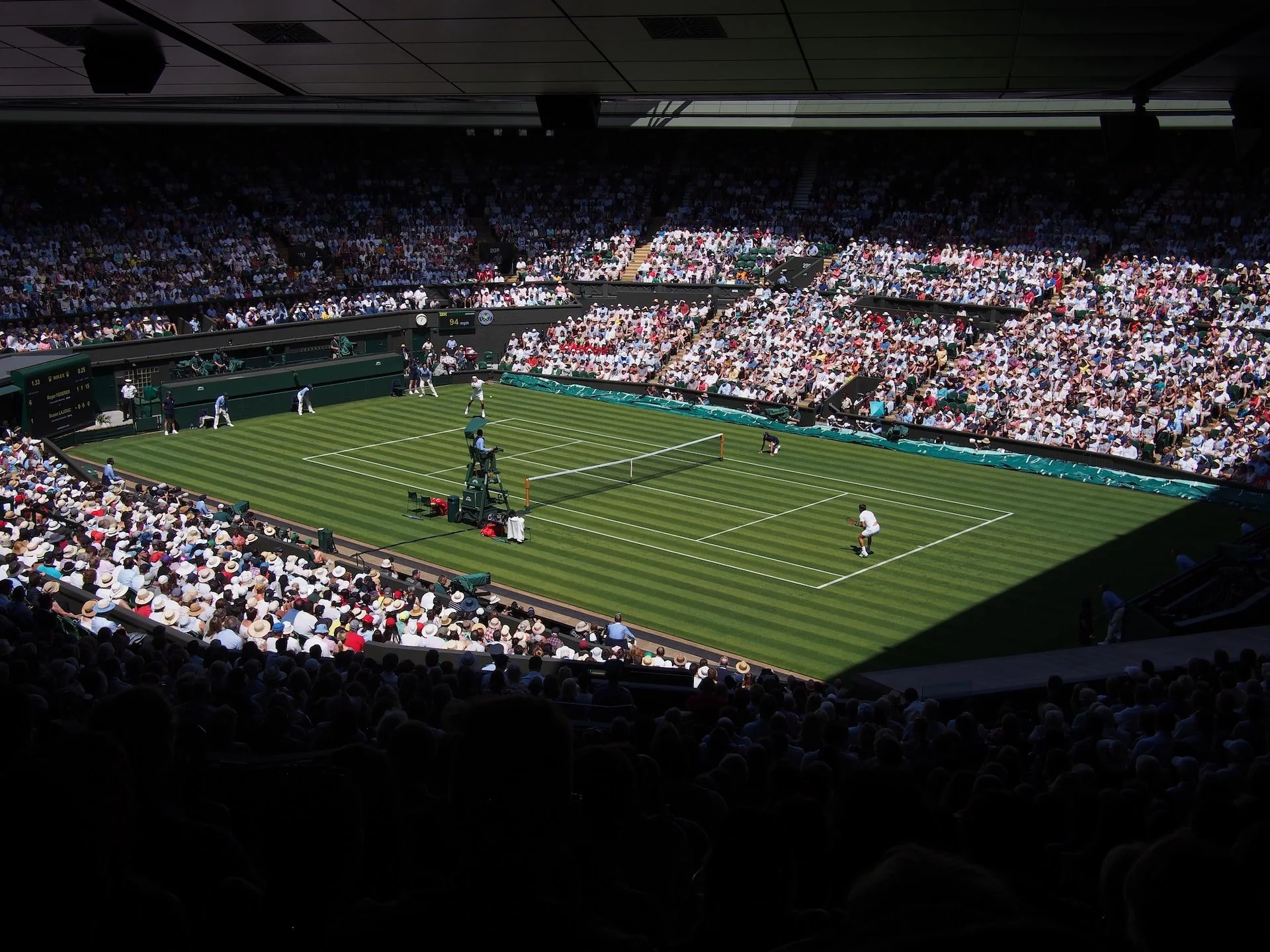
Have you ever considered the carbon footprint of the Wimbledon tournament?
Sustainability Ratings of Grand Slam Tournaments
| Tournament | Sustainability Notes | Rating |
|---|---|---|
| Wimbledon | Measuring and reducing emissions successfully. Our estimates suggest actual impact is much higher than communicated. | 🟠 |
| Roland Garros | Doing a lot to reduce emissions and listing them. Calls for improved transparency, showing strong early progress. | 🟢 |
| US Open | Most do more, talking of offsets and that is about it. Come guys, you need to measure and reduce emissions. | 🔴 |
| Australian Open | Measuring their emissions but not reporting them. Hopefully that will change soon. | 🟠 |
The Australian Open
A sneaky drop shot. On the face of it, there’s next to no information, but upon further digging, there is an acknowledgement that they are tracking tournament greenhouse gas emissions (they’re definitely not sharing them though!) That said, they are lunging in the right direction with some of their actions to reduce the waste generated by the tournament.
Roland Garros
Scores an ace with actions to reduce its carbon footprint such as a shift to electric fleet vehicles, use of renewable energy and sustainable food initiatives, but double faults for distinct lack of transparency when it comes to carbon emissions data.
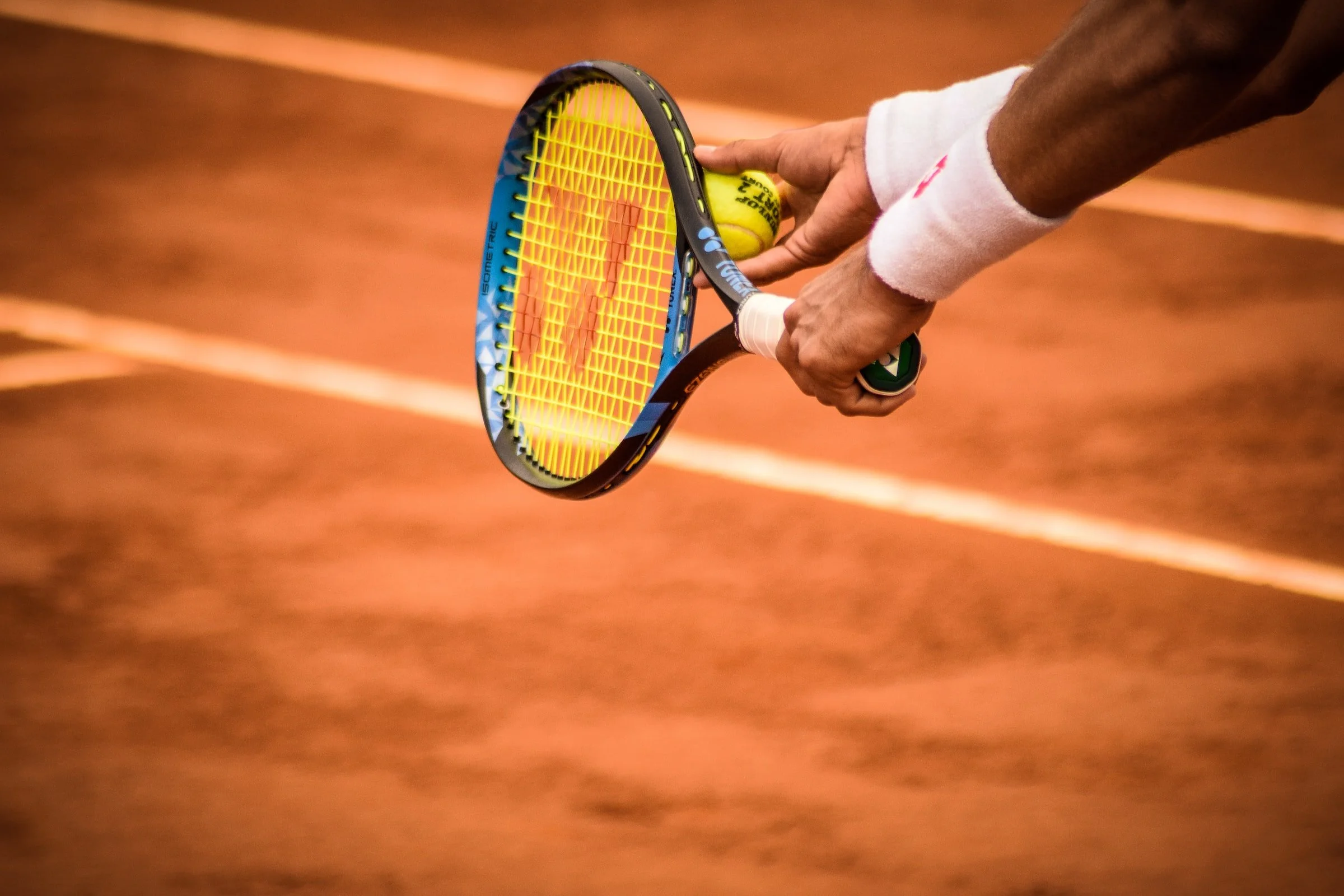
Rolland Garros scores a double fault for lack of transparency of its carbon footprint.
Wimbledon
Game and first set! With a net zero date of 2030 for their operational footprint, clear communication of what that includes, and plenty of clear steps on what they have done and plan to do in the future Wimbledon tops the leaderboard. They even shared their 2021 footprint (7,518 tonnes of CO2e).
The US Open
Overhead smash….and it’s out. A very disappointing set of climate actions with talk of offsets and making recycled water bottles (really?) The only zero on this page is the zero acknowledgement of the tournament’s actual carbon footprint.
Where do tournament emissions come from?
Taking Wimbledon as the norm (simply because this is the only tournament for which we have any data), according to the Eco Experts, the vast majority of tournament emissions emanate from travel. This includes players, officials, staff and the general public. A quick note: Eco Experts’ figures are much higher than Wimbledon’s own published data because Wimbledon doesn’t account for spectator travel.
Air travel is responsible for the largest share of emissions (a whopping 56% at Wimbledon) which is pretty shocking since it only concerns 11% of the people attending the tournament.
The rest of a tournament’s footprint comes largely from energy usage and waste.
Professional tennis players
Athletes are in an admittedly tricky position, they want to win and they do not pick the locations of the most lucrative tournaments. It is likely the athlete’s carbon footprint will primarily come from travel and merchandise. Encouraging athletes to turn away from private jets and lucrative sponsorship deals will be tricky but the current bar is set so low that Dominic Thiem creates waves by drinking out of a reusable water bottle. The sport is crying out for a player to tackle the issue head-on.
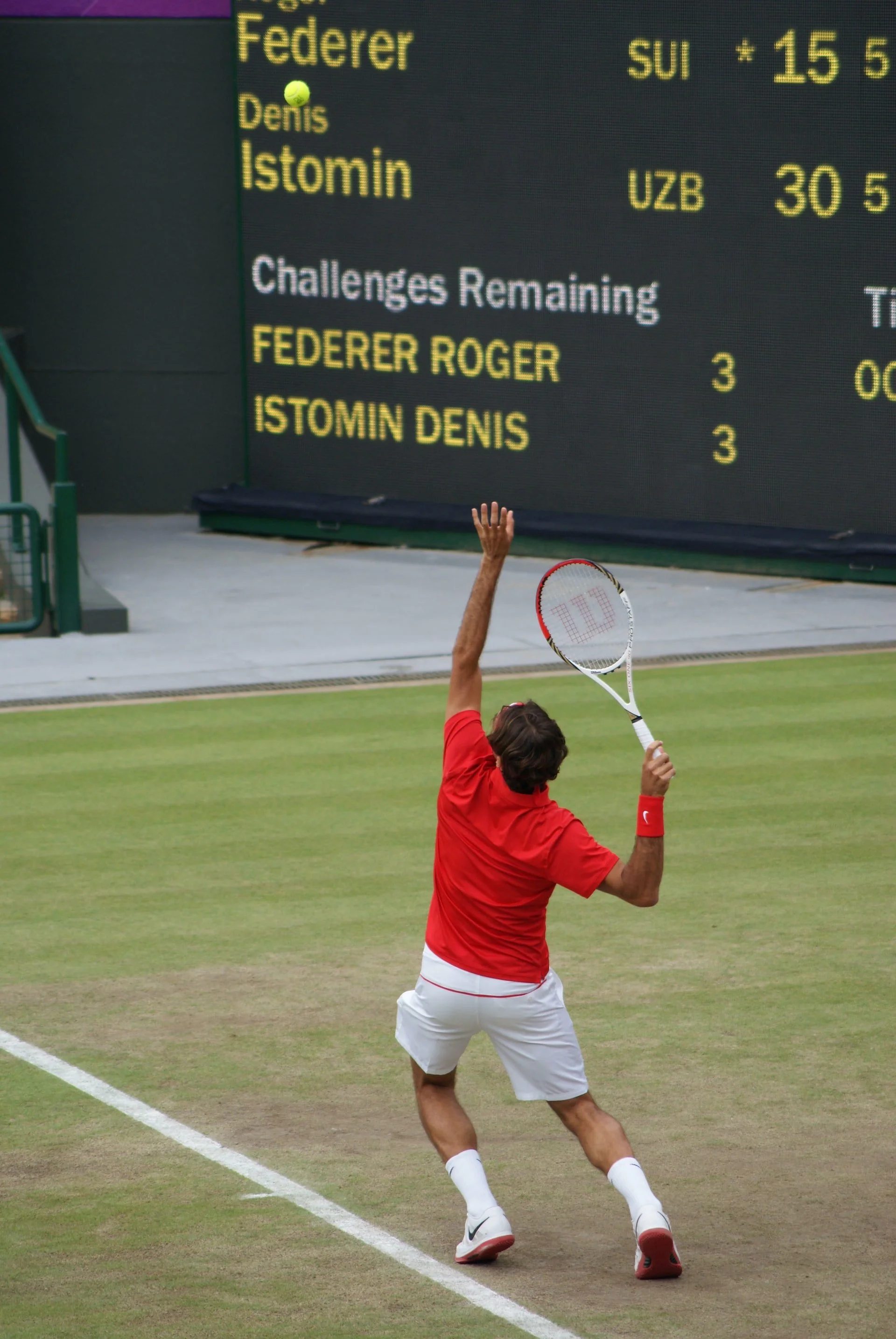
Roger - we are here to help if needed.
We started trying to work out the carbon footprint of Roger Federer for a year in his prime, based on his playing calendar but soon got bored as the result was clearly going to be gigantic just looking at his private jet use alone.
How to reduce the carbon footprint of tennis tournaments
For the tournament and tour organisers we would suggest:
Introducing mandatory carbon reporting deadlines for all association tournaments.
Setting science-based carbon reduction targets for each event.
Incentivising players to reduce their travel carbon emissions (perhaps extra ranking points for flying commercially as opposed to privately).
Following in the footsteps of SailGP, which has an ‘Impact League’ in addition to their competition leaderboard to encourage teams to reduce their environmental impact.
For tournament visitors, concentrating on how you get to and from the tournament will have the biggest impact. Taking public (ground) transport, or cycling to the event will have the smallest carbon footprint. Cycling is a particularly good option for getting to the Roland Garros tournament as they have security guards guarding your bike and also provide a bike repair services should you need it!
The carbon footprint of playing amateur tennis
If you’re a keen tennis player or thinking about taking it up, go ahead, it’s one of the lowest carbon participation sports going. The estimated carbon footprint of playing is tiny, even under the floodlights, at less than 2kg of CO2e per match. Playing outdoors is better than indoors and grass is probably the best surface but there will not be much in it.
The main thing you can do if you are playing tennis regularly or on a competitive basis is to choose sustainable transport options to get to matches and/or car share. Oh, and try not to lose too many balls.
Passionate about making tennis more sustainable?
Contact us to learn how we can help your team or organization reduce its carbon footprint.
