

Carbon Neutral, Carbon Negative or Net Zero?
It’s often said that sustainability has a communication problem. Emissions and carbon reduction strategies are no exception with jargon galore and no global consensus on the exact definitions. In this article we’ll be clarifying the differences between carbon neutral, carbon negative and net zero strategies to help you determine the best way forward for your business.
What is a Carbon Neutral strategy?
To claim Carbon Neutral status, you would take a high level estimate of your company’s carbon footprint each year (in tonnes) and buy carbon credits to ‘offset’ or ‘compensate’ for those emissions (1 carbon credit = 1 tonne of emissions avoided / removed). Year on year, it looks like this - as your annual carbon footprint fluctuates, so does your investment in carbon credits:
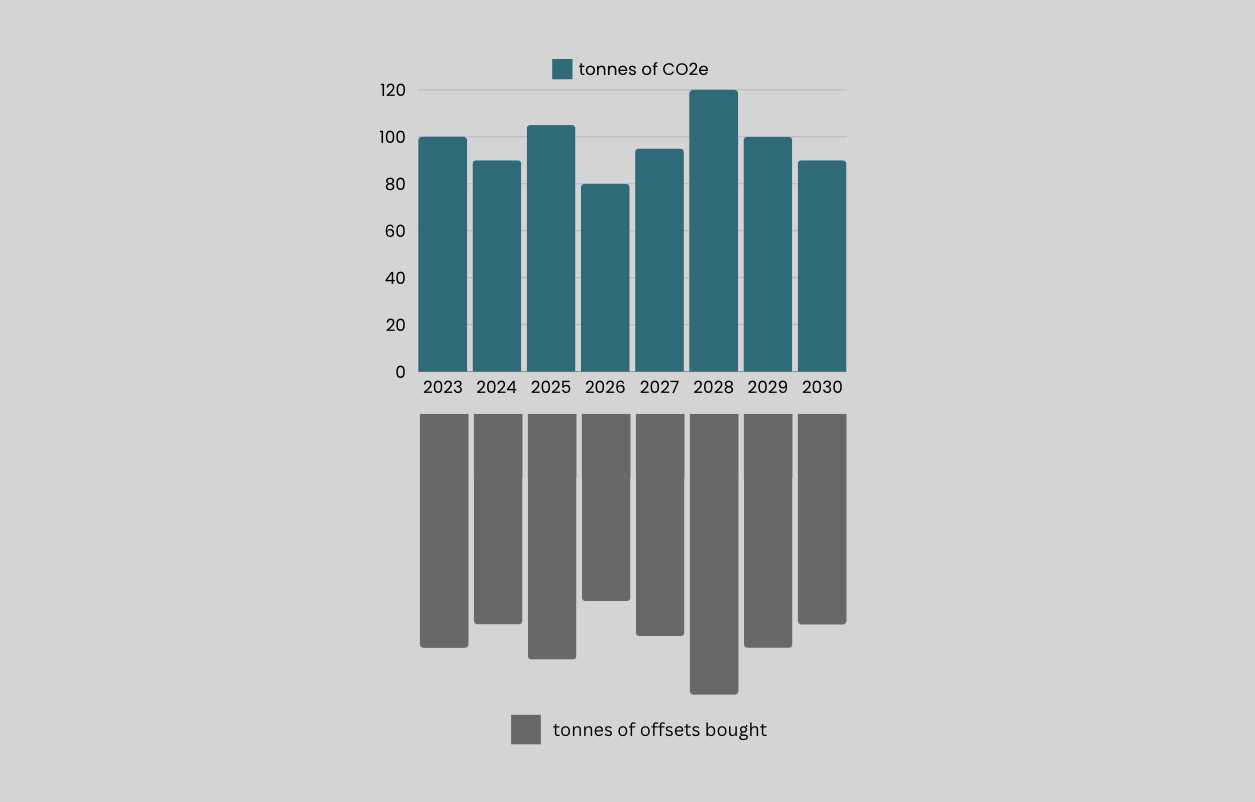
With a Carbon Neutral strategy you buy as many carbon credits as tonnes of emissions produced each year.
This is akin to medicating the issue rather than treating the root cause of the problem. Since there is no emissions reduction activity you would envisage spending on credits as long as you continue emitting greenhouse gases. Whilst perhaps better than nothing, we don’t recommend or rate this approach because it detracts from what needs to happen, which is emissions reduction.
It’s also worth noting that some companies claiming carbon neutrality only measure their Scope 1 & 2 emissions which are often less than 10% of their total emissions. This makes the claim almost worthless.
BEWARE: the EU is banning the use of terms such as ‘Carbon Neutral’, ‘Carbon Negative’ and ‘Climate Positive’ by 2026 that rely on the purchase of carbon credits. In the UK the term Carbon Neutral must be backed up by solid evidence to mitigate any risk of greenwashing claims. In practice solid evidence is not always easy to come by.
What is a Carbon Negative strategy?
A Carbon Negative strategy is very similar to a Carbon Neutral one except you want to do a bit better so you buy more carbon credits. This strategy is also known as Climate Positive (a term dreamt up by a marketing department somewhere to avoid using the word ‘negative’ which is…well, erm, negative. It looks like the image below. The pink reflects the extra credits bought:
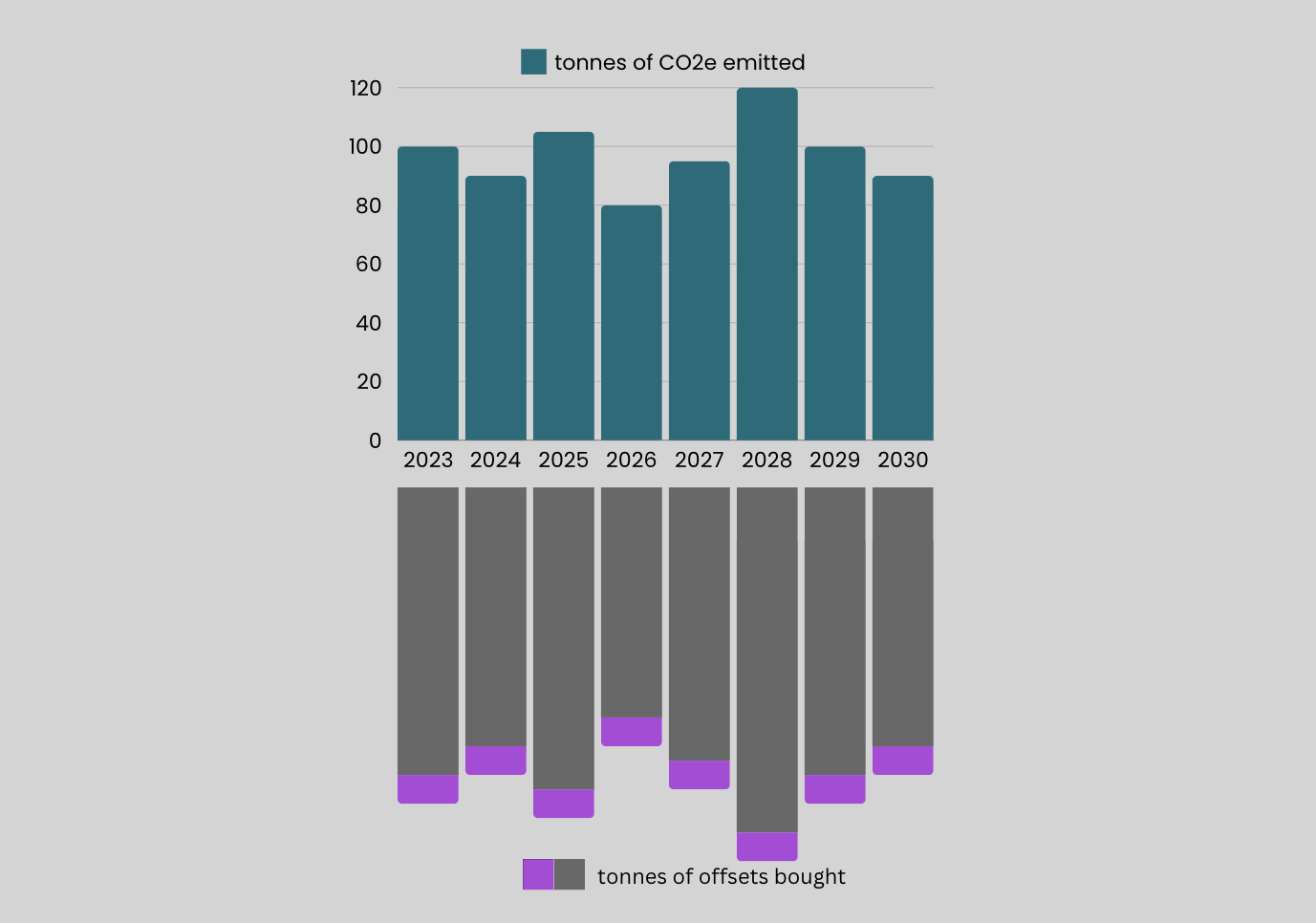
With a Carbon Negative strategy, you by carbon credits to cover more than your annual emissions
What is a Net Zero strategy?
A Net Zero strategy involves measuring all your emissions across Scopes 1, 2 & 3. That means the emissions created by your company and those in your supply chain too. You then find ways to reduce these emissions. This could involve some fundamental changes to the way your business operates.
Essentially, your emissions would go from looking like the chart on the left, to the chart on the right.

With a Net Zero strategy, you reduce your emissions year on year, although it’s not always as linear as this!
THEN, once you’ve reduced your emissions by 90% or more, you buy carbon removal credits to ‘offset’ the remaining 10%.
Let there be no confusion, THIS is the strategy you should be employing. We cannot simply offset our way out of the climate crisis, we must limit the amount of emissions entering the atmosphere.
Oh, and by the way, you can absolutely buy carbon credits in addition to year on year reductions, just be careful how you communicate this. You are still following a Net Zero strategy. Claiming carbon neutrality comes with greenwashing risks as discussed above and tends to cause confusion.
The challenges of Net Zero
Whilst Net Zero is the best approach, it’s not without its challenges. The first issue is a lack of consensus over the definition. The IPCC (International Panel on Climate Change) says it’s about balancing emissions with removals, but this doesn’t require reduction which is problematic. We (and lots of other climate specialists) prefer a definition that involves reducing emissions by 90% by 2050 or earlier. To achieve this, companies need to reduce their emissions by around 5% each year.
The other main challenge is that it’s hard to achieve. Before you can even reduce, you need to measure the carbon footprint of your company. The reductions can then take years, and involves customers, suppliers and employees. Lots of people don’t understand it and measurements aren’t standardised.
But do not use this as an excuse to do nothing, we need lots of people doing Net Zero imperfectly rather than a few doing it perfectly.
Do you need a Net Zero target date?
Do you have a crystal ball and can you predict the future? No? Then don’t stress too much about setting a target date. Better to spend the time getting on with reduction. Reduction activities before 2030 are the most crucial and should focus on your emission hotspots. Concentrate your efforts on short term targets, e.g 20% reduction in the next 4 years, and then go again after that.
What if you miss your Net Zero target?
There are no immediate consequences. Although you might not want to, you can adjust your target date, you just need to be transparent about any changes you make and the reasons why.
The good news is that the accuracy of carbon measurements will get better over time. That said, the main point we want to make is that we need everyone to reduce their emissions imperfectly, rather than a small group doing it perfectly.
Nobody knows the best way to do this. The companies making the biggest reductions are failing all the time. They are just taking ownership of those failures, learning from them and moving on.
What is a Science Based Target?
The Science Based Targets Initiative is an organisation that validates corporate Net Zero pledges. Pledges must align with the science agreed during the Paris Agreement to keep global warming to within a 1.5°C increase compared to pre-industrial times to help prevent the worst impacts of climate change.
A company looking to have its Net Zero targets validated would go about it like this:
We are going to reduce our absolute Scope 1 & 2 emissions by 95% by 2030 compared to our 2019 baseline year emissions.
We are also going to reduce our Scope 3 intensity emissions by 90% before 2040.
Here is how we calculated our emissions (methodology)
Here are the steps we are going to take (action plan)
Here is a link to our website / impact report showing our progress (to transparently document progress and changes to the action plan).
ecollective recommends…
Someone wise once said, “If it’s not hard, it’s not worth doing”. This quote is particularly apt when it comes to tackling emissions. The hard way (Net Zero) is definitely the best way. Reducing emissions is the only pathway to help limit the scariest impacts of global warming, to keep us and future generations in clean air, water and food and to futureproof your business too.
If you need help measuring your emissions and identifying the most effective reduction strategies for your business, get in touch.
