

What you need to know about carbon offsets
The world of carbon offsets is mysterious and confusing. Should you be doing it? If so, how? We hope we can help you with our simple guide to offsetting.
Our current thinking is informed by The Oxford Principles for Net Zero Aligned Carbon Offsetting 2020.
What is carbon offsetting?
An activity that either prevents the release of, reduces, or removes greenhouse gases emissions (typically carbon dioxide) from the atmosphere.
There are two forms of carbon offsets:
Carbon Avoidance: These are traditional offset projects that pay others not to pollute. For example, you can pay for cookstoves to prevent more destruction of forests (this is what most people do as it tends to be cheaper and more widely available).
Carbon Removal: It’s not enough to avoid emissions, we need to remove the GHG emissions in the atmosphere. There are two paths:
- “natural” solutions that sequester carbon, such as trees
- new technologies, like direct air capture (such as Climeworks)
We need both, but they’re expensive and small-scale today. Companies can and are playing a crucial role in changing that.

Our friends at Adventure Tours UK planting trees to offset their remaining carbon emissions.
What are the concerns about carbon offsetting?
Carbon offsetting can lead to inaction on carbon reduction. Some think offsetting = problem solved. Firstly, it would be far more planet-friendly to have not needed to offset in the first place, and secondly, it isn’t a future-proof solution. To offset global CO2 emissions we’d need to cover trillions of hectares of land in new trees - space we just don’t have (unless you know something we don’t).
Carbon offsetting is a relatively new phenomenon, it’s poorly regulated and as it hasn’t been around long, there hasn’t been much research into its efficacy and impact.
There is a social argument that it is not right or fair for rich “developed” countries in the global north to buy land from people in the global south and tell them what they can and can’t do with it.
What’s good about it?
Once we’ve done everything we can to reduce emissions we need to use carbon offsetting to balance the greenhouse gas emissions we can’t avoid.
Some carbon removal offsetting projects are at the forefront of climate science - investing in them gives the funds they need to develop and improve.
It’s a step in the right direction. There’s not much you can do about the emissions you have created in the past - offsetting your historical emissions is far better than doing nothing.
Our view?
We’re often asked our opinion on carbon offsetting.
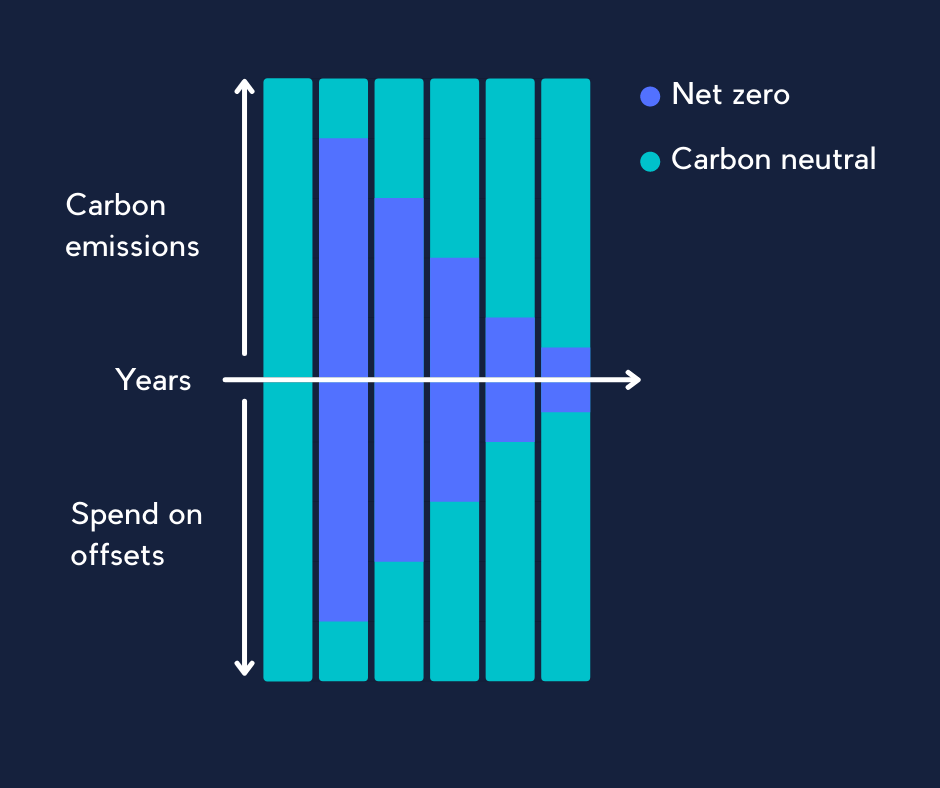
Our view is clear: do everything you can to reduce your emissions, then offset the emissions you cannot avoid with a high quality and flexible offsetting programme.
Do we recommend any offsetting projects?
Best practice is constantly evolving and new, high quality schemes are constantly being developed - this means it’s very difficult to suggest one. Please get in touch to ask our current go-tos. Don’t worry we don't take any commission from them.
Thinking about offsetting?
Read our guide on how to choose a carbon offset project next.