

How to become a net zero business
What is net zero?
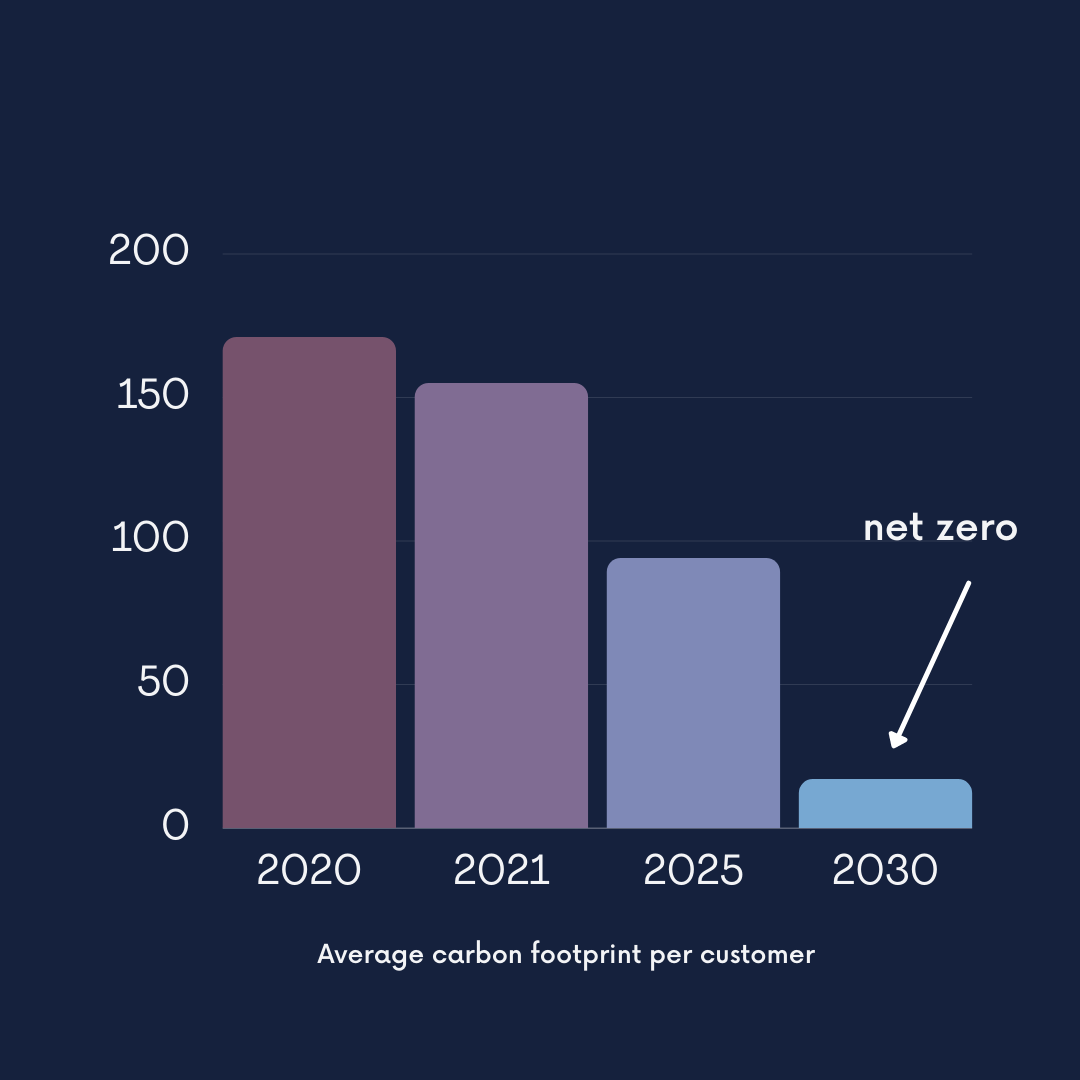
To be a net zero business you have to rapidly reduce your carbon emissions (typically by at least 90%). Once you have got as close to zero as possible you offset your remaining emissions.
This means that the amount of greenhouse gases in the atmosphere does not increase as any greenhouse gases that go into the atmosphere are balanced by the removal of gases out of the atmosphere.
Why does it matter?
We’re in a climate crisis. To prevent more devastating effects of global warming, the global temperature must not exceed 1.5°C (above pre-industrial levels).
The global temperature is currently 1.2°C warmer than it was then (in the late 1800s), so if we carry on behaving as we’ve done in the past, the temperature will keep increasing.
That’s why the Intergovernmental Panel on Climate Change (IPCC) set the global target to restrict global warming to no more than 1.5°C. To achieve this, greenhouse gas emissions need to reduce by 45% by 2030 and reach net zero by 2050.
In the UK, the government has committed to reaching net zero emissions by 2050. Although the science says that we should really get there before then (more like 2030) and we think the government’s target is not ambitious enough.
Whatever your opinion on targets, it’s safe to say we’re all agreed that we need to take action on carbon reduction.
How does my business get to net zero?
Reaching net zero means cutting your carbon emissions by at least 90%, and offsetting the remaining percentage.
We don’t blame you if you’re thinking how on earth do I do that? It is a challenge and we’d be lying if we said we thought it’ll be a breeze. Here’s how to go about it:
Measure your carbon emissions - work out where your business’ carbon emissions come from and see your footprint broken down into a simple score.
Make a carbon reduction plan - keep it simple. You just need to make a small reduction in Year 1 - you don’t need to know what you’re going to do in 8 years time. Just start. The measurement process will show you what areas to focus on first.
Start taking action - start making those changes to reduce your business’ carbon emissions year on year. Some things will be easy, some things will require educating and influencing your suppliers and not everything will work. However, the climate crisis is so extreme that we have to start now.
What does a carbon reduction plan actually entail?
In simple terms, it means reducing your carbon footprint by 5-10% every year by changing the way your business works, or who you work with. (It gets a bit more complicated when you bring Scope 1, 2 & 3 into the mix - let us know if you’d like more info on that.)
First off, focus on what you can directly control, ie what you can change without asking for someone else's permission.
Each business is different and will have different changes they need to make to be more sustainable. Here are some strategies every business can apply:
Reduce waste
Recycle more
Switch to renewable energy
Make your supply chain more sustainable
Why is it ‘net’ zero not just zero?
It’s generally accepted that there are some carbon emissions that are impossible to get rid of. Therefore you don’t need to cut all your emissions, you need to cut out the avoidable ones and offset the others.
How much does reduction cost?
That's unfortunately an impossible question, but you’re allowed to focus on reduction strategies that are financially viable for your business. The trick with a successful carbon reduction plan is to think creatively about how you can create more value for your customer whilst spending less money. Typically, this will benefit the business and your carbon footprint.
What’s the difference between net zero and carbon neutral?
The main difference is that to be carbon neutral you don't have to reduce emissions, you just have to offset them. This isn't a sustainable, future-proof approach.
Carbon neutral: “I have done a high-level guess of my footprint and have bought offsets yearly to cover those emissions.” Not to be confused with a carbon neutral product - when just a single product, ie. one bag or watch, has its emissions offset rather than the whole business.”
Net zero: "We report on all our emissions, try to reduce them as much as possible, and then we invest in projects that either prevent emissions elsewhere or pull carbon out of the air to reach a “net zero” balance on paper."
What's SBTi?
The Science Based Targets Initiative is fantastic. They provide the rules and the framework for us to follow to make sure you are on course for net zero emissions.