

What’s peat and why is it important?
If you’re plugged into climate news you’ll have heard all the excitement about peat. If you’re not, here’s what you need to know.
What actually is peat?
Peat is plant material that forms in waterlogged, acidic conditions. (It looks a lot like soil.)
60% of the world’s wetlands are made of peat. Peatlands include moors, bogs and fens, as well as some farmed land.
Where can I find it?
12% of the UK is covered by peatland. You're most likely to find peat bogs in cold, temperate climates, particularly in the Northern Hemisphere. In the UK, this means Scotland and Ireland, where there’s lots of rain but low drainage. Here’s a map of England’s peatlands.
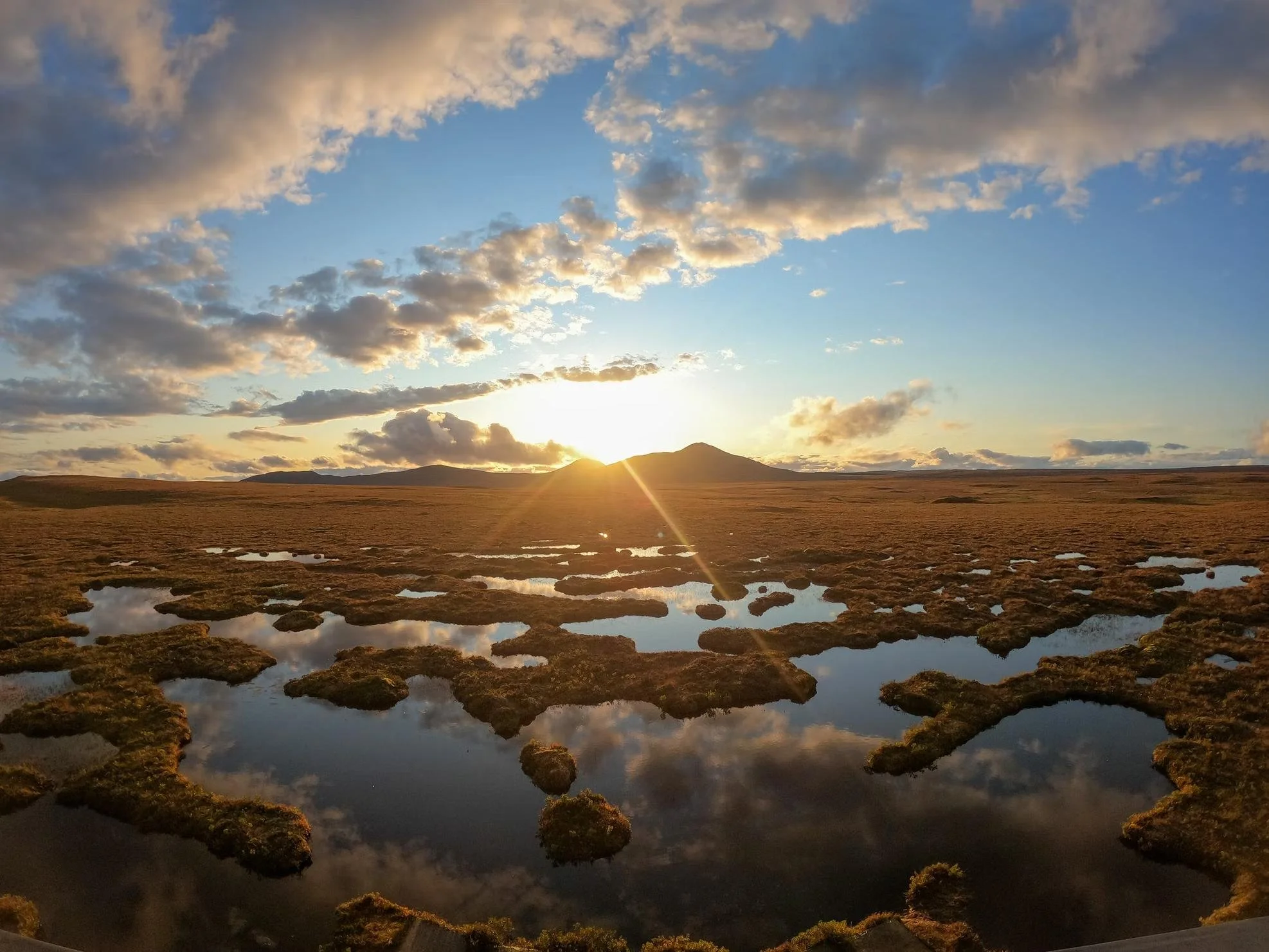
Sunset over Flow Country in Northern Scotland – the most intact and extensive peatland in the world.
Why is it important?
Peat absorbs a significant amount of carbon.
Although peatlands make up just 3% of the Earth’s surface area, they store twice as much carbon as all the world’s forests combined, which cover 30% of the globe. This makes them one of the most important carbon sinks, and a valuable asset when it comes to tackling the climate crisis.
However, if drained or burned, peat has the opposite effect, releasing all the carbon it stores into the atmosphere. It’s estimated that the emissions produced by draining or burning peatlands currently make up 5% of global GHG emissions.
Why aren’t we talking about it more?
Peat’s carbon capture capabilities have only recently been discovered.
Before this, peatlands were seen as an ugly waste of space, and have been damaged by drainage, burnt to produce energy, mined, and destroyed to make way for agriculture. We’ve already drained around 15% of the world’s peatlands.
So what are we doing about it?
Now that we all understand how invaluable peat is, environmental organisations across the world are launching schemes and campaigns to protect it. It’s also being protected by carbon offset projects.
The Global Peatlands Initiative was founded at COP 2016 and is working on conservation, restoration and sustainable management of our planet’s treasured peatlands. They’re currently investigating peat’s future role in the global carbon cycle - we’ll update when we find out more.
Questions about carbon capture and carbon offsets? Let’s talk - we love an excuse for a chat.