

8 Decarbonisation Tips for Tour Operators
Global travel and tourism accounts for around 8-11% of global emissions. It’s a sector that has found decarbonization tough, mainly due to the inertia of the aviation industry in this area, but that doesn’t mean that decarbonisation isn’t possible. In this article, we’ve concentrated on our top tips for tour operators to reduce their greenhouse gas emissions starting with the highest emitting elements first.
1. Influence customer travel to the holiday destination
This first point is a contentious one because many tour operators don’t currently include customer travel that is not booked with them in their carbon footprint. This is despite the fact that their customers wouldn’t be able to take their holiday or trip if they didn’t travel to the destination in the first place. If included, it typically makes up around 80% of a tour operator's carbon footprint.
They argue that because this part of the trip is not booked through them, they have no control over how their customers travel. BUT, whilst tour operators may not have direct control, they can influence how people travel by suggesting lower carbon options such as train or coach or even lower carbon carriers or routes if air travel is unavoidable.
For reporting purposes, customer travel to the holiday (when not bought through the tour operator) is not currently mandatory, but we include it in our dashboards to encourage operators to think about how they can influence their customers (or even adapt their trips to be closer to their target audience).
2. Reduce transfer emissions
Many tour operator-run trips start at the country destination airport where holiday-makers are met off their planes in vehicles and transported swiftly to their accommodation. Tour operators can lower transfer emissions by transferring people as a group by bus, by booking them train tickets, or if taxis are used, hiring an electric taxi rather than one with an internal combustion engine. More and more taxi companies are moving to electric vehicles, for example 25% of SnowDrone Transfers’ fleet in the French Alps are electric. They use Teslas and Mercedes EQVs to transfer guests from local airports and train stations to the ski slopes.
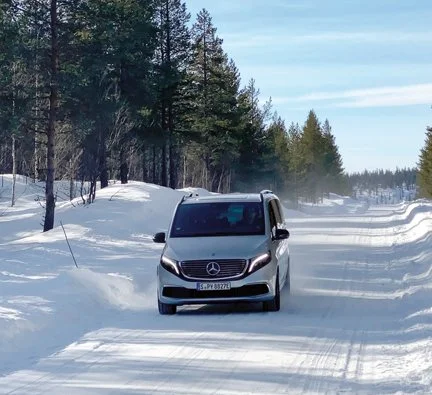
Transfer guests in electric vehicles
But hang on, we’re missing a step here. By providing transfers from the airport as standard, tour operators are actively encouraging holiday-makers to fly. Flying may be necessary in the case of a trip to an island (unless there’s a ferry route), but on mainland Europe for example, why not offer transfers from a train station instead? In fact, if people are getting the train to a city centre and the trip begins there, they may even be able to walk or make a short hop on public transport to their accommodation, bringing transfer emissions closer to zero.
3. Choose accommodation with a net zero plan
Onto accommodation where the playing field isn’t as level as it may seem at first glance. The carbon footprint of a hotel can vary wildly depending on how it is powered, what amenities it has (swimming pools, sauna, jacuzzi etc) and what star rating it is.
Remember that if your accommodation providers have a Net Zero target, as they decarbonise, your carbon footprint will come down year on year too so it makes sense to ask the question and choose your provider wisely. Remember, you can influence through your purchase power here.

Select accommodation with a verifiable net zero plan in place
4. Reduce the meat content of included meals
Food is always an emotive subject, but in the case of GHG reduction, the data doesn’t lie. Reducing meals that are high in meat (specifically beef and lamb) and dairy products is a surefire way to reduce the carbon footprint of the meals included in your package. Portion control or working with a supplier that has a solution for food waste (such as the Too Good to Go programme) is another way to reduce the carbon impact since food waste accounts for such a high percentage of food-related emissions.
If switching ‘cold turkey’ to a vegan menu is out of the question we have a suggestion: replace any beef and lamb dishes with chicken or pork and add one vegetarian and one plant-based meal in between. This will keep your menu varied and reduce its carbon footprint at the same time. Winner, winner, low-carbon dinner.

Lower the carbon footprint of the meals included in your holidays
5. Swap to lower emitting activities
Holiday activities come in all forms from exploring on foot, by bike, boat, jet ski, snowcat, train or helicopter to participating in activities from sky-diving to snorkelling, big game safaris to skiing, vineyard visits to museum tours, cookery lessons to day skipper boating qualifications.
Each activity (and the transport to and from it) comes with its own carbon price tag. The key is in eliminating those high carbon activities in favour of lower carbon options. A good example would be to offer a MoonBike excursion (on an electric snow bike) rather than a one on a snowmobile (which is powered by a diesel engine). The thrill is the same, but the associated emissions are tiny in comparison.

Moonbikes: same (or more) fun as a snowmobile with a much lower carbon footprint.
6. Lower the footprint of your HQ
The headquarters of a tour operator usually only makes up around 5% of the company’s carbon footprint. With limited time and resources, you would therefore make a much bigger difference focusing your efforts on decarbonising your trips. That said, it can set the tone for your business and your team if you work on decarbonising your HQ operations too.
The biggest element of your HQ’s carbon footprint is likely to be your business travel. Start reducing this by providing each team with a business travel carbon budget for the year and incentivising them to come in below budget. More information on how to do this can be found here.
Next, consider your office. Is it powered by renewable energy? If not, can you switch? Is your building as efficient as it can be? What about brochures? If you’re sending out gazillions of brochures you may like to read this newsletter on how to reduce this element of your carbon footprint and save a lot of time and energy to boot.
Other ideas for decarbonising your business…
7. Carbon Literacy training
Helping your team understand where the carbon footprint of your business lies and how they can play a role in helping to reduce it has proven to reduce a company’s carbon footprint between 5 and 15%. We have seen this first-hand and can vouch for the fact that a workforce engaged around climate and carbon reduction is one of the best ways to hit your net zero target. Find out how ecollective can help with this here.
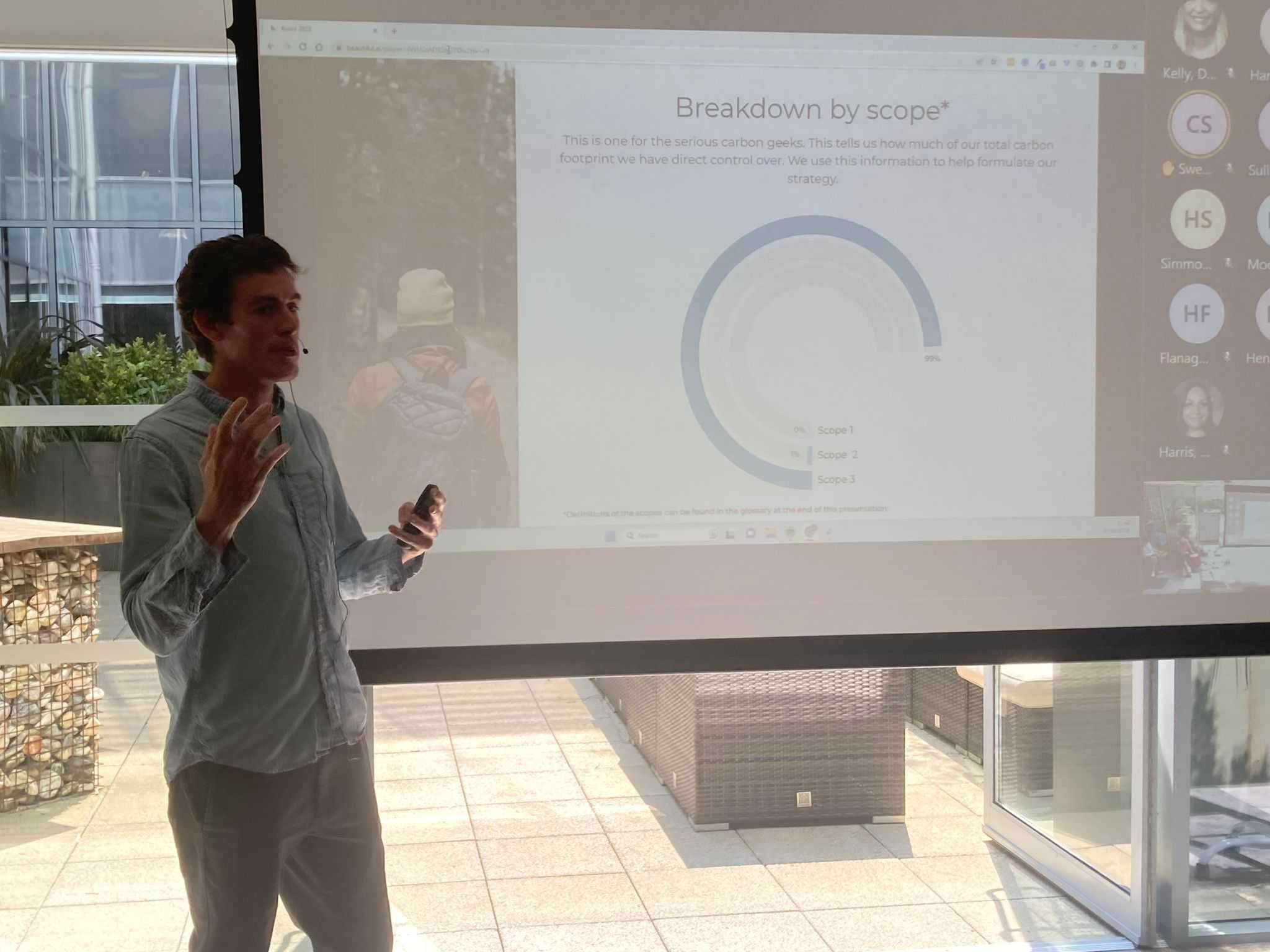
Book ecollective to provide Carbon Literacy training for your team
8. Carbon Labelling
Carbon labelling is when you publish the carbon footprint of your product for your customers to see. The idea is that they will be inspired to choose lower carbon options. This works to a certain extent, but the other, perhaps more interesting effect is that it helps your product managers take responsibility for the carbon footprints of the trips they are responsible for. We have seen this work in practice. You could even incentivise your team to reduce the carbon footprint of their trips whilst maintaining (or increasing) customer satisfaction levels. Find out more about carbon labelling here.
How ecollective can help…
If you’ve reached the end of this article, you hopefully have a hit list of actions to take back to your business to start reducing its carbon footprint. If you need any help with any of the above as well as measurement, Net Zero target-setting and other decarbonisation actions then do get in touch.
