

How To Reduce Upstream Scope 3 Emissions
Scope 3 emissions typically make up between 70-95% of a company’s carbon footprint. They tend to be those that you do not have direct control over, but over which you have a good degree of influence. They are split into 15 categories divided into upstream and downstream emissions. Downstream emissions are those created once your product leaves your premises. Find out more about downstream emissions here.
Upstream scope 3 emissions are all the greenhouse gas emissions created in order to bring your product or service to market (outside of the fuel you use and the electricity you purchase, i.e. your scope 1 & 2 emissions). They include pretty much everything you buy to make your product: your capital goods (like buildings, machinery and vehicles), the transportation required to get materials to you, the waste generated by your operations, business travel, employee commuting and leased assets. In this article we’ll go into what these elements are and how you can reduce the emissions they create.
Purchased goods and services (Category 1)
Also known as cradle to gate emissions, these emissions come from all the ‘ingredients’ that make up your product or service. If you sell computers, it’s the emissions from all the components you buy in and those of your third party manufacturer too. For example, if you commission ecollective to measure your carbon footprint, our services have their own carbon footprint of around 42 kgs of CO2e per project (in 2022/23) which you would include in your scope 3 emissions.
The most accurate way of calculating these emissions is to get the data directly from your suppliers. For this, you’ll need to open up a dialogue with them. Ideally, you’ll set a road map in place for them to be able to share their emissions data with you automatically going forward.
Reducing purchased goods and services emissions
Whilst you don’t have the ability to reduce these emissions directly, you do have purchase power on your side. Informing your suppliers about your Net Zero ambitions and asking them for data is a good start. Once you have the data you should be able to compare their emissions against the industry standard or other similar suppliers. Hotels for example can have a very different emissions profile depending on what energy they use. Switching to a hotel with a lower carbon footprint sends a clear message and reduces your carbon footprint to boot.
Capital goods (Category 2)
Capital goods are fixed assets such as equipment, machinery, buildings, facilities, and vehicles that have an extended lifetime. For accounting purposes the value is depreciated over time. For emissions reporting, you report the total embedded emissions of the item in the year it was purchased. Didn’t buy a new piece of equipment or a new property this year? Then you’ll have no category 2 scope 3 emissions.

Reduce capital goods emissions by investing in the most efficient buildings, machinery and equipment you can afford.
Reducing emissions from capital goods
This is where you need to do your homework. Anything you buy is going to add a chunk of emissions to your carbon footprint. Keeping that to a minimum, whilst fulfilling the needs of the business is the name of the game. This is where the ‘sustainability lens’ comes into play. View purchases with emissions in mind and not just through the eyes of the business imperative. This is a mindset and a culture to develop within your business that can be accelerated by training your employees in Carbon Literacy.
Fuel and energy related activities (Category 3)
This category is a slightly tricky one to get your head around but it exists to account for the emissions that are created by the energy that is lost on its way to your premises. No supply network is infallible and with gas and electricity delivery, there is a roughly 5% loss between the supplier and the customer. This category also covers the carbon footprint of producing the petrol that goes into your company car. The burning of the fuel sits in Scope 1 whilst the production emissions sit here in category 3 of Scope 3.
Reducing emissions from fuel production and energy loss
You might throw up your hands in despair thinking you don’t have any control over energy losses in the grid, gas losses in the pipelines or how the petroleum company produces the fuel you put in your company car but you’d be wrong. This is all about the choices you make. Electricity loss can be combated by generating your own electricity, using solar panels for example. You could also reduce these emissions by using less energy. Fuel production emissions can be avoided by switching to an electric fleet.
Upstream transportation and distribution (Category 4)
These emissions are created by the transportation of purchased items from your supplier to you (by air, rail, road, water). If you buy things from a factory in China, Portugal or the US that go into your products, the emissions from shipping it to you sit in this section.
Reducing upstream transportation and distribution emissions
There are 2 ways to reduce these emissions. The first is to order less items/materials in the first place or order things that weigh less since the heavier the items, the higher the transportation emissions. The second way is to speak to your supplier, as it is them who will organise the logistics. They may offer you a choice of air freight or boat (boat = lower emissions generally) but otherwise, simply ask questions about your suppliers’ choice of transporter and express a preference for the lowest carbon options.
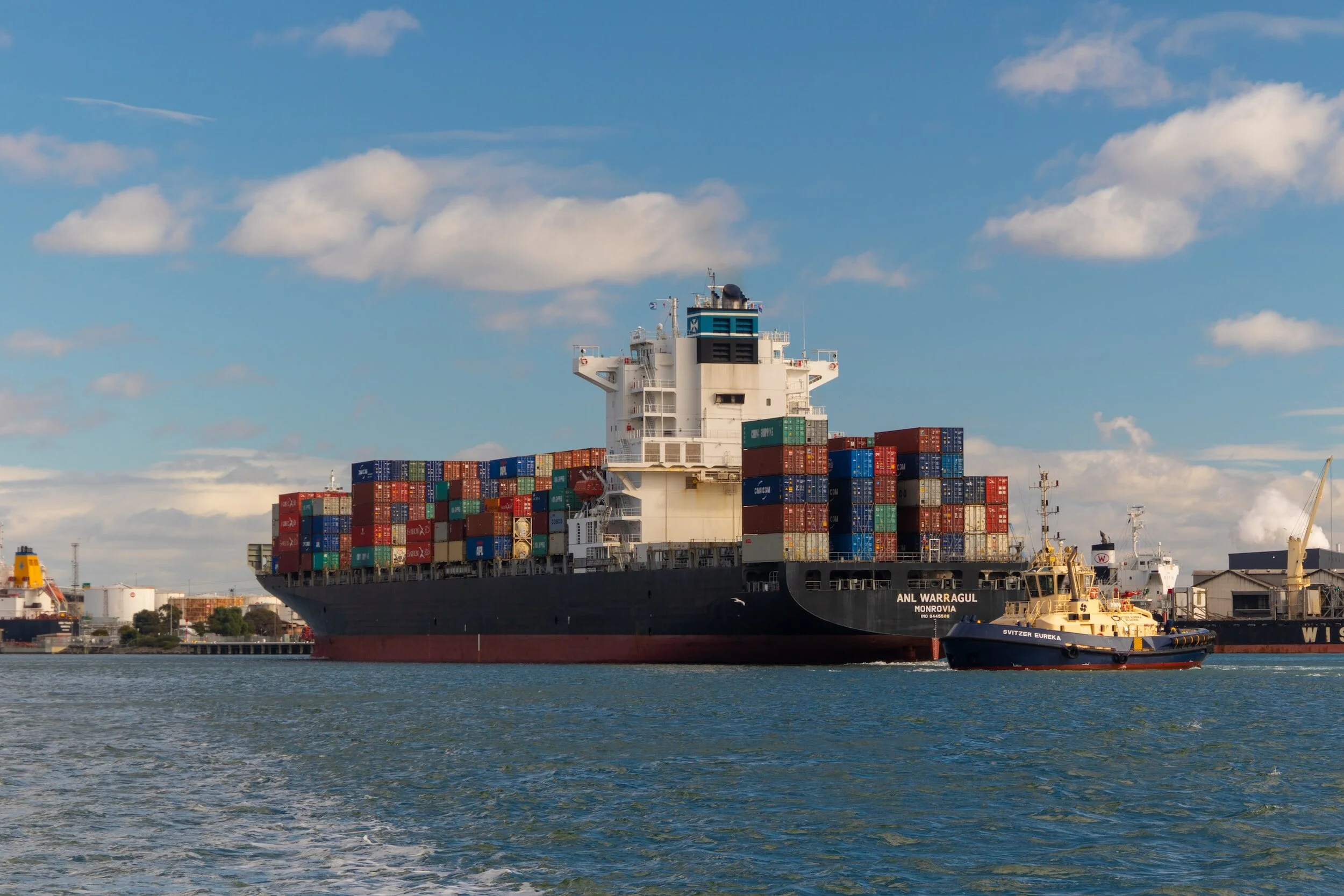
It is possible to reduce the transportation emissions of the items you purchase.
Waste generated in operations (Category 5)
This is pretty self-explanatory, it’s the emissions from any waste that your organisation generates that goes to landfill, for recycling, for incineration, composting and includes water waste that goes to a treatment plant too.
Reducing waste emissions
The reduction tips are pretty obvious too. To reduce waste emissions, simply reduce how much you waste. Eliminating waste can have positive financial benefits. The key is to get creative. Firstly in terms of ideas for how to waste less and then, for identifying potential uses for your waste. Eastpak for example have a range of backpacks called Resist Waste created from leftover fabric that would otherwise end up in landfill or being incinerated. One of the leaders in the field of waste utilisation is British Sugar, which has avoided waste by creating a range of co-products to put their waste to good use. Find more information on the financial and environmental benefits of their actions here.
Business travel (Category 6)
When we talk about business travel, we’re talking about trips made by employees for work-related reasons using transportation operated by 3rd parties (like train, air, bus and passenger vehicles not owned by your company).
Reducing business travel emissions
The obvious question to ask is does the employee need to attend that meeting / event etc in person? Improvements in digital technology and online meetings more and more normalised, doing business in this way has a much lower carbon footprint. However, it is difficult to monitor the movements of your employees across the business so what we would suggest is implementing a business travel carbon budget. Check out this article to learn more about this and how to implement it in your organisation.

Reduce commuting emissions by incentivising employees to use zero-emissions travel
Employee commuting (Category 7)
These emissions arise from your employees travelling between their home and their place of work (at your offices or off-site at client sites). All forms of transport are included. It is calculated by understanding how far your employees commute each day and by which mode of transport.
Reducing employee commuting emissions
You might jump to the immediate conclusion that a work from home policy might be less carbon intensive than having your team commute from home to your office every day but in our experience, that’s rarely true. The carbon emissions of them heating and lighting their individual homes usually more or less balances their commuting emissions so you’ll need to dig a little deeper. Some companies have begun to incentivise employees for their ‘green . clean’ commutes either by foot or by bike. Schemes like the bike to work scheme can support low carbon commuting too.
Upstream leased assets (category 8)
These are emissions from assets leased by your company that are not included in scope 1 or 2 and only applies if you operate the leased assets (ie. your company is the lessor). Items might include cars, buildings or perhaps ships. xxx
Reducing emissions from upstream leased assets
Your options depend on what you’re leasing but typically going for lower carbon choices such as electric vehicles and highly eco-rated buildings and/or ships is the answer here.
So there you have it, a complete run down of those upstream Scope 3 emissions that are being generated by your organisation and how to reduce them.
If you’d like help calculating your company’s carbon footprint, and/or help setting science-based targets and strategies to meet those goals then do get in touch.
