

How to Run Low Carbon Events / Exhibitions
Events are a part of life and business. They are designed to share experiences, make connections, showcase new products and services, to celebrate, to up skill and so much more. The thing is, they often come with a much higher than necessary carbon footprint. This comes from power generation to run the venue, the stands and paraphernalia needed to run the event, how the attendees travel, where they stay, what they eat and drink and the waste that is generated.
It’s tricky to measure the carbon footprint of an event too (as there are so many moving parts), so many event companies are putting off doing it. As a result, there is a big focus on small but visible elements of events like coffee cups, goody bags and lanyards. This is leading to inaction when it comes to the genuine carbon hotspots.
This article focuses on exhibition type events and highlights, in order of importance, which areas of your event you need to manage in order to reduce its carbon footprint.
1. Attendee Transport
This is by far and away the biggest portion of any event’s carbon footprint, and in some cases it can be up to 90%! It falls within your scope 3 emissions (see here to learn about the different scopes) which means you don’t have direct control over how your attendees travel but you can influence their choices.
Firstly, consider where you hold the event. Where are the majority of your attendees based? Holding the event in a location central to where your attendees will be coming from, or in the place where the majority are based will mean less travel emissions.
Secondly, choose a venue with good public transport links and publicise this fact. To encourage people to travel by public transport (or clean transport like by bike or on foot), many event organisers provide incentives, discounts or other benefits. Another option is to charge extra for parking for petrol & diesel vehicles.

Hold events near a public transport hub to reduce attendee travel emissions.
2. Attendee Accommodation
If you’re holding a multi-day event, your delegates will need somewhere to stay overnight. Not all accommodation has the same carbon footprint so you’ll need to vet local hotels, identify the lowest carbon options. If you are running short of time, those running on renewable energy, or with a solid Net Zero plan should be your go to options.
3. Venue
As with accommodation, not all venues are equal when it comes to their carbon footprint. The Business Design Centre in London for example has measured its carbon footprint, trained its teams in carbon reduction and has an actionable Net Zero plan in place. They’ve already switched to renewable energy for example. Choosing a venue like this one significantly reduces the carbon footprint of your event.
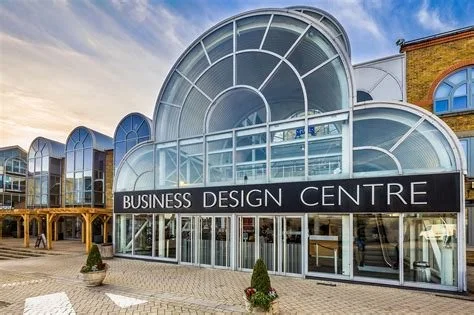
The Business Design Centre is working to be Net Zero by 2030
If the venues you’re considering haven’t published a Net Zero plan, then ask them about it. If they don’t have one, you can ask other questions around whether they are on a renewable energy tariff, what their waste policy is etc. to get a feel for whether they are a good fit for you.
In theory, Net Zero venues should be cheaper as they should require less energy.
4. Event stands & carpet
Believe it or not, the stands at an event can contribute considerably to an event’s carbon footprint (up to 20%). There are essentially two types and one creates much lower emissions than the other.
The best low carbon choice is a shell stand provided by the venue that exhibitors add their own look and feel to. The reason this is so low carbon is because the shell can be used over and over again. The other option for exhibitors is to simply rent a space at the event and put your own freebuild stand up. This tends to involve using a lot of single use materials and creates a lot of waste.
The need to build ever bigger (and more wasteful) stands comes from the competitiveness between exhibitors. But it's time to get creative at events. EarthRuns put together a whole stand made out of cardboard boxes that they transported flatpack to the event and put up. They were then able to take them down and re-flatten them ready to transport home and store ready to reuse at the next event.

A masterclass in low carbon, low waste, creative event stand design by Earth Runs
Let’s talk about carpet. Yep, if you’re like the majority of event organisers you’ll be putting carpet down to designate the customer areas in your event. Carpet has a high carbon footprint being generally made from plastic (i.e. fossil fuels) and once the event is over, the carpet is ripped up and sent to landfill (more emissions). The solution? It’s pretty clear. Ditch the carpet.
5. Food & drinks
The food and drink footprint of an event can be up to 10% of an event’s carbon footprint. There are plenty of ways you can reduce this figure by choosing food vendors wisely. What they sell at your event will have the biggest bearing on their carbon footprint with plant-based the lowest carbon option. Other things such as how they source, transport and package their food has a much lower impact but sends a positive message to your attendees if ingredients are locally sourced and dishes are served using reusable tableware.
6. Waste
Events have the potential to generate a lot of waste. This mainly comes in the form of the aforementioned freebuild stands, single use food and drink containers, flyers and brochures. Lots of events focus on their recycling policy but this doesn’t cut the mustard when it comes to real carbon reduction. The clue is in the name, reduction is the game (oh, that rhymes!)
Our call to action is again creativity. How can you incentivise exhibitors to produce less waste from their stands, encourage attendees to bring their own water bottles and keep cups for hot drinks and reduce the number of wasteful flyers and brochures around the place?
With all attendees walking around with a smartphone in their pocket, QR codes are a great tool that can be used effectively at events to link people to the event itinerary / agenda and send them through to company websites for competitions, deals and more information. Storing information digitally will have a much lower carbon footprint than anything that is printed and don’t forget your event layout can really influence behaviour. Make it easy for people to find what they are looking for..
7. Other (lanyards, brochures, goodies)
Lanyards, goodies and brochures generally have a tiny impact in comparison to the other elements mentioned above. That said, they are very visible elements of an event and you can bet your attendees’ eyes will roll if they are not responsibly considered. What’s our point here? Do give them some thought but don’t spend too much time on them. Your time will be much better spent on all the areas above and telling them about what you’ve done (digitally of course) to make your event be the lowest carbon exhibition of its kind.
Help is at hand…
Here at ecollective we’ve worked with a number of events businesses including Completely Events, Hyve and Raccoon Events, and events venues like the Business Design Centre and the Museum of Modern Art (MoMA). If you’re looking for help measuring the carbon footprint of your event and identifying the most effective carbon reduction strategies going forward, drop us an email or book a free, no obligation, 30 minute call with Charlie.
