

8 Areas Businesses Can Reduce Waste to Cut Emissions
We lack imagination when it comes to reducing waste but there are some obvious benefits over and above saving valuable resources. The most important (as far as we’re concerned) is carbon reduction. Generally the more efficient your business, the smaller your carbon footprint. This means that reducing wastage is a valuable part of any carbon reduction action plan and, if you’re not convinced by this argument, wasting less means saving money too. Let’s go through 8 of the key areas where your business can make efficiencies that will shrink your carbon footprint as well as your expenses.
1. Electricity
Switching to a renewable energy provider is the most obvious way to cut down your scope 2 emissions. That said, saving electricity, even if it’s from renewable sources, will reduce your company’s carbon footprint further because there is a carbon cost associated with the creation and distribution of electricity. Solar panels and wind turbines have their own embedded carbon and there is a carbon cost to transporting the electricity along the power lines to your premises. This is called WTT (well to tank - not a great description for clean energy we admit) and covers production and delivery.
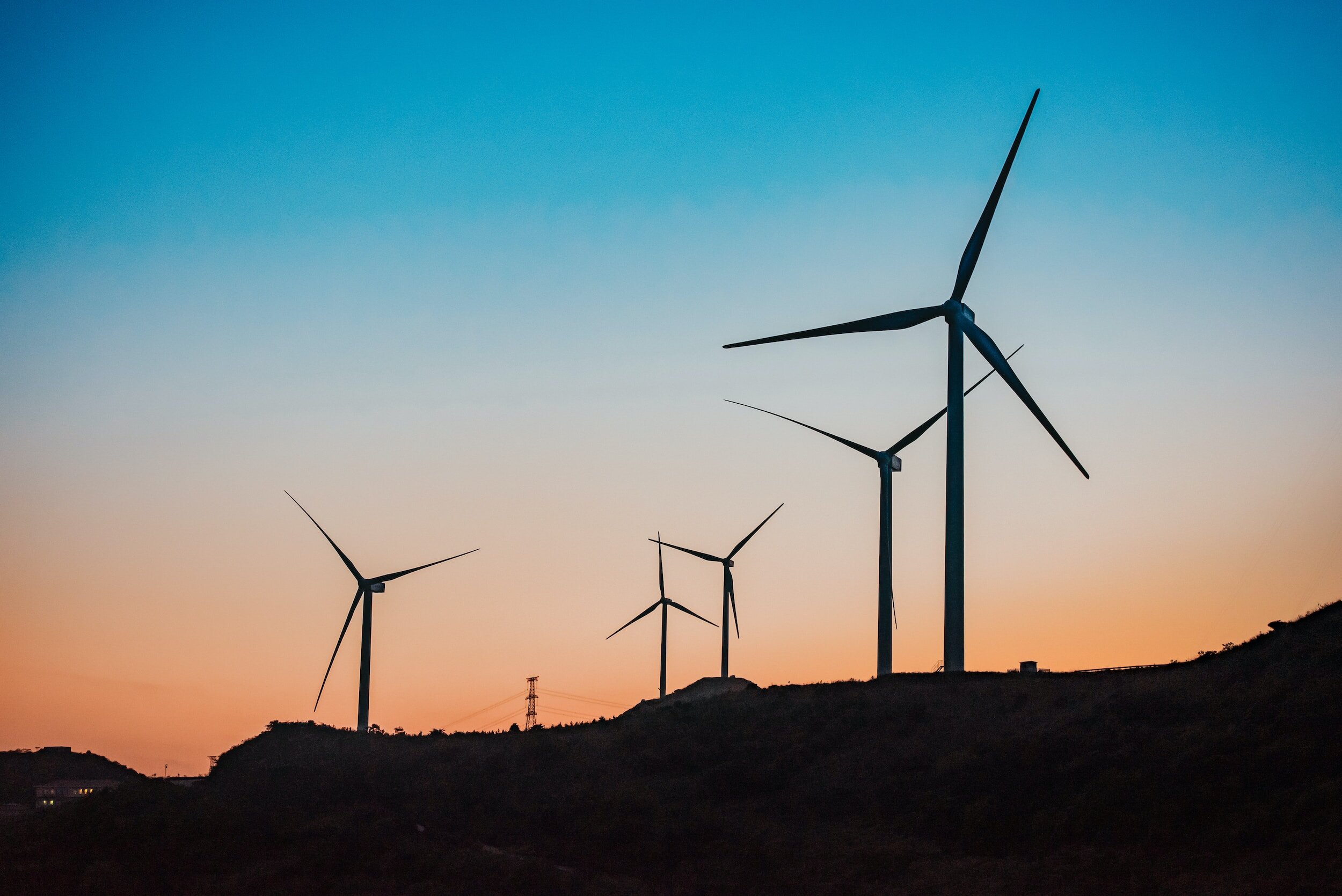
Even renewable energy has a carbon cost
How can you reduce your company’s electricity consumption? Buying low energy consuming devices is one way (look for A+ ratings), turning off electrical appliances rather than leaving them on standby is another.
CASE STUDY: One GP surgery reduced their overnight energy usage by 29.7%, cut their carbon emissions by 1.6 tonnes and saved £1,220 per year (based on 2021 prices) according to a case study by Dr Matthew Sawyer. They effected this behaviour change by removing the friction associated with turning off appliances at night which included putting the plugs in each room onto one extension lead that could be easily unplugged each evening.
2. Heating and Cooling
There’s a reason ‘Insulate Britain’ is on the campaign trail, and it’s to help the UK reduce its reliance on fossil fuels through investment in building insulation to keep us warmer in winter and cooler in summer.
Making your buildings more efficient at maintaining a comfortable working temperature will pay dividends down the line, not just in reducing GHG emissions but also reducing the cost of heating (and perhaps more importantly) cooling as the Earth’s temperature increases.
“The warmer it gets, the more we use air conditioning. The more we use air conditioning, the warmer it gets.”
The US already uses as much electricity for air conditioning as the UK uses in total. There is a hidden concern around air conditioning units too as they have the potential to leak hydrofluorocarbons which have a much higher warming potential than carbon dioxide when released into the atmosphere.
What steps can you take to better insulate your buildings?
Improve your glazing: 35% of your heat disappears through walls, leaky doors and windows. Opting for the best glazing (and fitting) possible will limit your losses.
Blinds and shutters are effective at blocking the heat that comes with sunlight, keeping your premises cooler in summer months and insulating windows in winter.
A quarter of heat is lost through the roof so Insulating roofs and filling cavity walls with soft insulation is akin to wrapping a blanket around the building

Blinds help keep offices cooler in summer reducing reliance on air conditioning
If you have a work from home arrangement, then as well as your premises, you’ll want to consider your team’s home-working situation and how you can support them to make it as energy efficient as possible since their home working emissions fall into the Scope 3 part of your carbon footprint.
Another thought includes questioning whether you need an office building at all. Desk and meeting room space can be rented as needed at existing co-working spaces meaning you’ll only be creating emissions when you’re actually using them unlike with a permanent office which creates emissions even when it is empty or only partially in use.
3. Water
It’s not an obvious emitter of greenhouse gas emissions, but water treatment and supply comes with its own carbon footprint (carbon dioxide emissions from water collection, treatment and supply services in the UK amounted to approximately 918,100 metric tons in 2021). The less water your company uses, the smaller its related carbon footprint.
Water savings vary depending on the type of company you are. Agriculture, for example, has very different requirements to a firm of solicitors. Water savings in buildings can generally be made by ensuring there are no leaks and installing low flow taps, water saving dual flush toilet cisterns. Less innovative, but no less important, messaging can also be used to remind workers (and perhaps customers) to use water responsibly.
4. Digital hardware
E-waste (waste of electrical items) is growing rapidly with the digitisation of our work and lives in general. It grew 60% between 2010 to 2019 to a record 53.6 million tonnes!

Limit e-waste in your business to reduce emissions and save money
Despite needing to use technology, we can limit how much of it we waste by:
Buying repairable items like Fairphone mobile phones and Framework laptops and those proven to be more durable.
Upgrade components rather than whole items
Lengthen the renewal cycle. Rather than updating employees’ mobile phones every 2 years, only update them when required.
5. Single use items
Single use is a phrase that has been created to mean something we use once and then throw away. In an office setting, this is most often food and drinks containers and packaging and let’s face it, there is pretty much no need for the former when most offices are equipped with a kitchen with sink, kettle, coffee machine and fridge.
So what can you do? When it comes to the daily brew, buy tea, coffee and sugar with as little packaging as possible. Support a local milk delivery service that delivers in glass bottles (many also offer plant-based options too).
Either encourage employees to bring their own coffee cup and glass or provide them for everyone to use.
Many offices now have policies saying that employees can’t bring single use plastics onto the premises encouraging them to have a keep cup for their commute and bring their own lunch or containers for take out.
6. Merchandise
Gifts, freebies or products emblazoned with your company’s logo can create more problems than the joy they are supposed to deliver. Think about cereal boxes with a toy that pops out, the free low-quality t-shirt that is given at the end of a running race, or the branded mugs, pens, USB keys etc you get at a conference.

Conference merch - is it worth it?
Merch is distributed with good intentions to make people happy and provide a bit of promotion for your business but is rarely a good investment. Often it is low quality to keep costs down which can elicit complaints if they break and/or damage the reputation of your company. You could also be painting yourself into a corner by allowing people to expect these gifts making it difficult to stop providing them without further disappointment.
Our advice would be to cut these out as soon as possible. You could even communicate about why you’re choosing to stop producing merchandise and allocate the budget either to carbon reduction activities or positive projects that promote biodiversity. Now that would provide some good publicity.
7. Brochures
Printed brochures are another area where we advocate for reduction to save carbon (and other resources). Travel agent, Kuoni, has given this a lot of thought and has come up with a more ‘evergreen’ style of brochure that they can print less of, while retaining the desired impact.
Their new brochures focus more on making their different holiday experiences visually appealing and contain calls to action for readers to access more information and pricing online. This way, they can keep their website up to date negating the need to print new brochures every time the price or dates need changing.
There are even more benefits to this approach. Writing, designing and proofreading brochures for print takes an awful lot of time and resources as well as being quite stressful for those involved.
In addition, Kuoni has implemented a brochure on demand strategy. This means nothing is pre-printed, reducing unnecessary consumption of paper etc.
8. Food
The UN Environment Programme estimates that 17% of the food available to consumers is wasted and this is happening in our workplaces as well as at home. So what can you do?
If you’re organising meals for company meetings, why not collect people’s orders (or at least dietary requirements) in advance so you can order the right amount of the right food for your meeting participants?

Reduce food waste by checking dietary requirements in advance
Perhaps you serve food as part of your company’s offering. If this is the case there are a number of things you can do including thoughtful ordering, having a strong labelling and storage system, sensible portion control (having people serving rather than free-for-all buffets is one way to manage this), having a waste-control culture amongst the kitchen and serving team and then, when you’ve done everything possible, have a strategy to use any waste that is generated. This could be by donating it, using it for animal feed etc.
More information about preventing food waste can be found on the WRAP website.
What are you wasting for?
Pun intended (no, we have no shame). Now that we have highlighted some of the areas you might be able to save waste, CO2 emissions and money, why not choose one area where you can start? If you need any help you can always contact us.
